


When I was young, my grandparents often took me to Switzerland on holidays.
We would stay close to the mountains, take the gondola up to the glacier, and go hiking.

Everything was calm and orderly in a way that stuck with me, even as a little kid.
Years later I went back for work, this time as a management consultant. Unfortunately, that period was more work and less hiking.
Switzerland has been “in the background” of my whole life.
The reason I never thought of moving there is simple. I like warm weather all year round, and Switzerland gets cold.
But somehow, I can’t let go of it.
I went there on holiday as a kid, went back for work as an adult, and even though I now live across the globe, many of my business relationships are still tied to it.
I hold very fond memories of Switzerland, and I would describe it as the first place I truly admired.
The admiration I had for its beauty slowly turned into admiration for what it does with money.
It taught me, and continues to teach me, many lessons.
Some of them I want to share here today.
Last month I wrote about the fourth bank account, the one you open in a country you don’t live in.
I called it “your own personal Switzerland”.
Some of you wrote back with the same question:
Why Switzerland? Why not just say “somewhere safe”?
So let me shine some light on it.
Here’s what we’ll cover today:
Why the “boring” Swiss approach still grows your money
Why spotting a conflict of interest can save you a fortune
The two things the Swiss own that most Americans never think about
The first rule is the myth almost everyone still believes.
#1 The “secret” Swiss account is a myth
Forget everything the movies taught you.
And forget those clowns trying to sell you things that simply do not exist (seeing things like this makes me want to see my breakfast a second time).
The numbered account nobody could trace died in 2009.
That version of Switzerland is gone.
That year, under US pressure, UBS handed the names of around 4,500 American account holders to the Department of Justice and paid a $780 million penalty.
After that, more than 80 other Swiss banks lined up for the same deal, paid over $1.3 billion combined, and turned over their clients.
Secrecy was the product.
But since FATCA took effect in 2014, every Swiss bank reports its American clients straight to the IRS. Since 2018, Switzerland automatically shares account data with more than 100 other countries.
So if you are American and you open an account in Zurich tomorrow, the IRS knows. You report it yourself anyway (on your FBAR and Form 8938).
Having said that, privacy is not dead.
But “privacy” and “secrecy” are not the same thing, and people use them interchangeably.
You can legally keep your name private and shield your money from lawsuits. What you cannot (or should not) do is hide it.
That road only ends in a courtroom, and not a numbered account.
None of that makes Switzerland worse.
You would just be going there for what it actually does well.
The money I keep tied to Switzerland is not hiding from anyone.
That way, I sleep fine.
Keeping something “secret” would not make me sleep fine.
Takeaway: Swiss secrecy ended in 2009, so anyone still selling you a "hidden" account is selling you something shady.
#2 Stability first, then growth
The first thing I noticed working with a family office in Geneva is what they don’t talk about.
They almost never mention “beating the market” or “we’re up X% this quarter”.
One line that comes up often, and that I will never forget is:
“We think in generations and decades.”
Most people measure money in quarters. Public companies do the same, panicking when a single quarter comes in soft.
The Swiss measure money in the lifetime of your grandchildren.
One of my clients has a young son. The family office set up the parents’ portfolio, and then opened a second one for the kid.
He’s part of those important conversations from a young age, which is priceless education.
They are already teaching him how the banking works, so that by the time it becomes relevant, he knows what is really important.
The fastest way to destroy a plan built for decades is a single bad loss.
Lose 50% in a bad year and you need to make 100% just to get back to where you started.
One ugly year can wipe out a decade of gains.
When you plan in decades, avoiding unnecessary risk matters more than any hot streak.
It helps that the ground under them is solid.
Swiss government debt sits below 40% of GDP (the US is above 120% and growing).
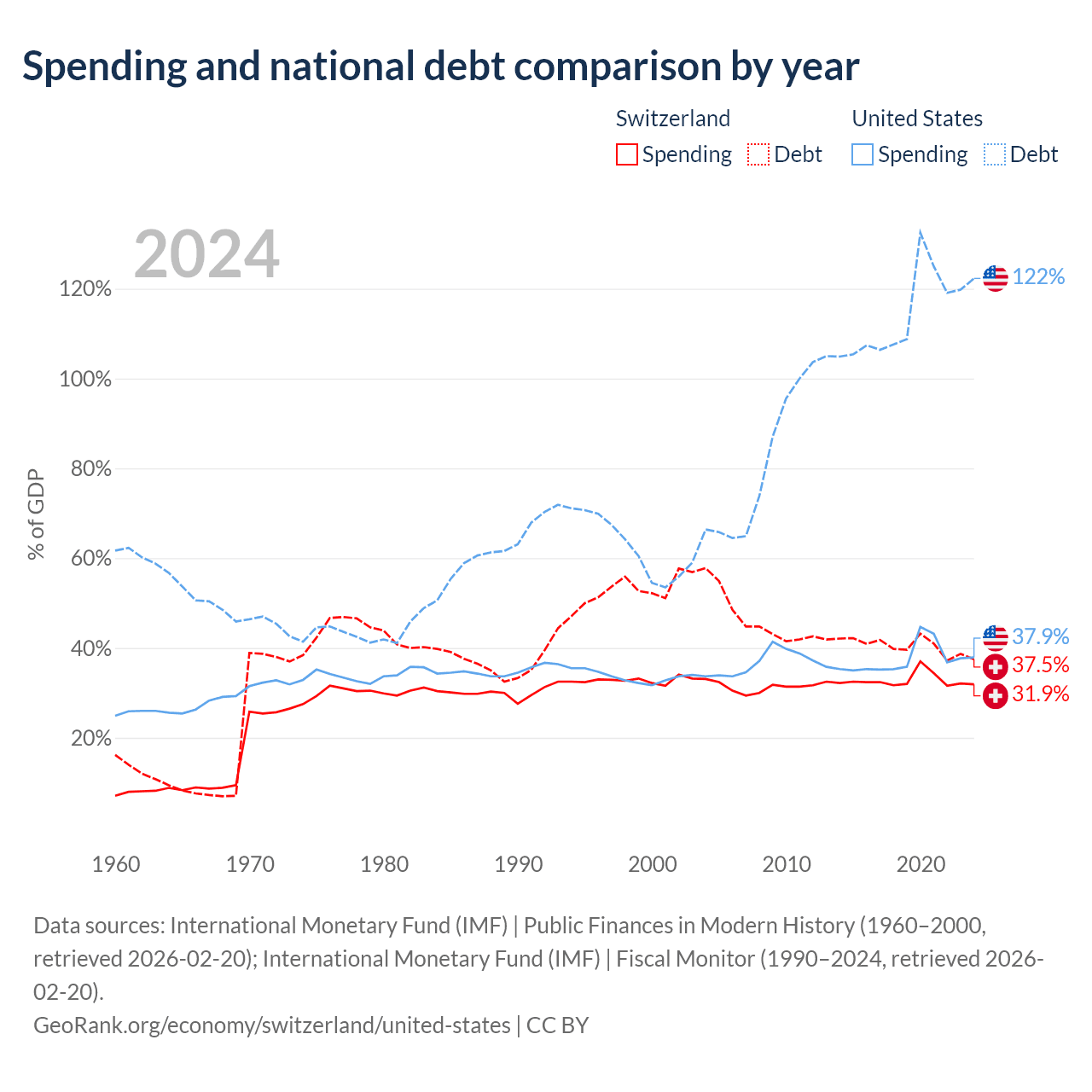
Inflation there has been low for decades, so your money keeps its purchasing power without you doing anything.
So the money still grows.
It just grows without having heart attacks, every time you open the news.
Takeaway: When you measure money in decades, avoiding disastrous years matters more than chasing a few % points.
#3 The franc itself is an asset
I do not earn francs, nor do I spend them.
Yet, I keep some of my money in francs.
I hold them for one reason:
Over time, the franc keeps its value better than many other currencies.
Most people never think this way.
If your whole life is earned in dollars and saved in dollars, you never stop to ask whether the dollar is the best thing to hold.
The Swiss ask constantly.
To them a currency is something you own, like a stock or a piece of land.
And by that measure, the franc has been one of the best things you could have owned.
In 1970, one US dollar bought about 4.3 Swiss francs.
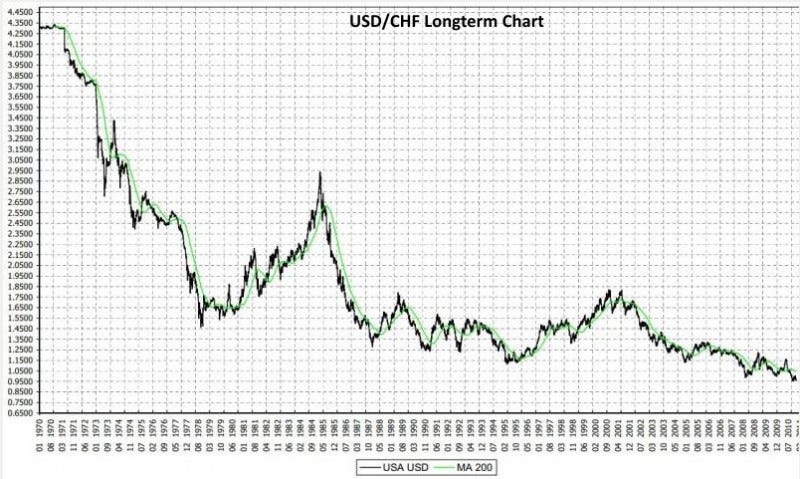
Today it buys less than one (think about that fact for a second).
The dollar lost most of its value against the franc over my lifetime, and it is still happening.
The franc gained around 13% on the dollar in 2025 and hit an 11-year high in 2026.
When the world gets nervous, money runs to Switzerland.
Why?
Because it has low debt and a central bank obsessed with protecting the franc.
I am not telling you to bet everything on francs (all of this is purely educational content).
The franc pays almost no interest (in contrast to the USD), and in calm years it just “sits there”.
My point is that holding different currencies makes sense, to de-risk relying on a single one that constantly loses value.
Takeaway: Holding part of your money in francs is a bet on “boring”, but boring has beaten the dollar for over 50 years.
#4 Hold what can’t be printed
Most people have never held a gold bar.
The Swiss built an industry around it.
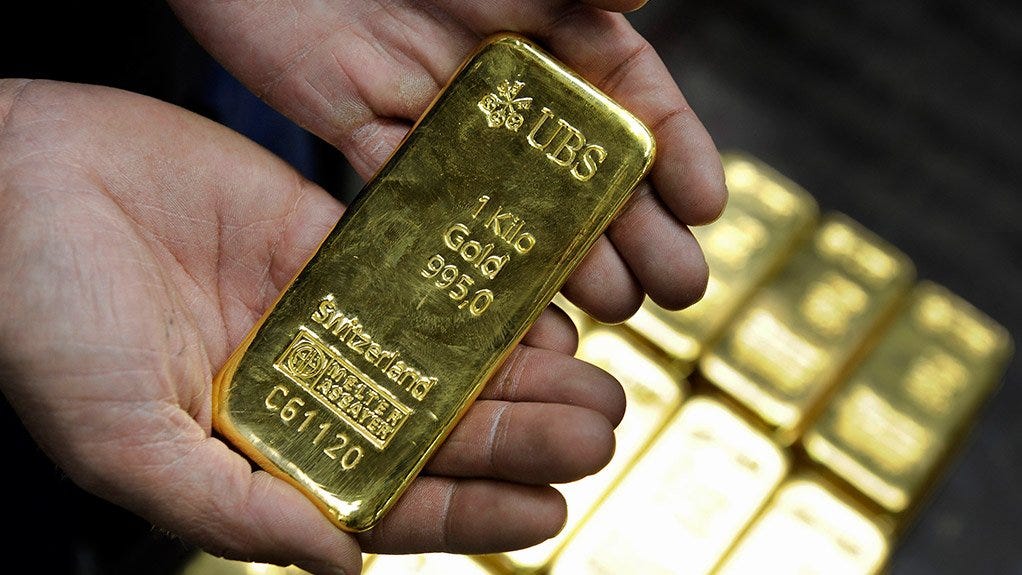
Around two-thirds of the world’s gold passes through Swiss refineries.
Names like Valcambi and PAMP sit in peaceful valleys, melting and recasting bars for central banks and customers.
Precious metals are one of Switzerland's biggest exports.
The Swiss franc itself was backed by gold until 2000.
A constitutional rule kept at least 40% of the currency covered by gold reserves, and Swiss voters only ended it in a 1999 referendum, decades after the rest of the world let go of gold.
A dollar in your bank account is a promise.
It is just a number on a bank’s ledger, and if the system runs short, the government can print more any time it likes.
Gold is different.
Nobody can print it (and it does not care who is president).
More and more clients that I connect to Switzerland are asking for physical gold, in addition to making their portfolios “truly global”.
A real asset is something you actually hold, that exists whether or not a bank is open or a government is steady.
Metal is one. Property is another.
That is why, next to a strong currency and metal, I keep part of my wealth in property in Thailand.
It will not double overnight, and I cannot spend it at the store.
But it is mine, sitting in the physical world, not a number someone can freeze (or inflate away).
Takeaway: Keep a slice of your wealth in something nobody can print, because a promise is only as good as whoever makes it.
#5 The bank works for the bank (and not for you)
The first time I understood this, I was standing in my parents’ living room about twenty years ago.
A bank statement was lying on the coffee table.
It was a life insurance policy the local bank had sold them. I picked it up and read the numbers.
The returns were tiny. The fees were enormous.
Twenty years later, I can still see that coffee table.
I remember exactly how angry it made me (it still does).
My parents had trusted the friendly man at the bank, and the friendly man at the bank had sold them something built for the bank.
The first time I went into business with one of my Swiss partners, the line that sold me was this:
“Often there is a conflict of interest. With us, it is not like that.”
A bank earns from its own products.
So the person across the desk has every reason to steer you toward the funds and policies that pay the bank the most, whether or not those are the cheapest or the best for you.
In the US, this is perfectly legal. A broker at a bank is not your fiduciary.
Since 2020 they have to recommend something in your “best interest” when they recommend it, but that is a lower bar than the duty an independent, fee-only advisor owes you.
They can still push whatever earns the firm more (as long as it is disclosed somewhere in the fine print).
Another “trick” I see often is the myth of the global portfolio.
US banks love to say they build “global” portfolios, but a lot of that money still sits in US stocks and US funds.
Maybe global on the brochure, but local in the actual account.
None of this makes every advisor a crook.
Fee-only fiduciaries exist, and they are the ones to look for.
But the person selling you products inside a big bank is paid by that bank, and it pays to remember (!) whose name is on their paycheck.
Takeaway: Before you trust anyone with your money, look for the conflict of interest hiding in how they get paid.
#6 Access is the real product
The wealthy have one real advantage with money, and it is access.
At the top end, they will not even open a file for you below a few million dollars.
Walk into a private Swiss bank on your own and you are a “walk-in,” an unknown, treated as high risk and quoted retail prices (or turned away).
As one of my partners put it: “Good luck with going direct”.
Come through an institution that already parks billions at that same bank, and things change.
This way, you go through the institutional door, at institutional prices, the kind of access normally reserved for eight-figure fortunes.
They can also open investment opportunities that would otherwise be out of reach.
Some people seemingly offer access for “free,” or bundled into a shiny package.
I would be very skeptical.
If something is free, you are always the product.
They are almost always taking a silent kickback from the bank, which is the exact conflict of interest from the last rule.
The bank pays them, so they work for the bank.
I do it the other way, and I am not shy about it. I charge real money upfront (and my rates are not cheap).
I can stand behind my pricing for two reasons. I only work with the best people and institutions, and I take nothing from any of them. No referral fee, no cut of anyone’s assets.
I am paid by my clients, which means I answer to them, and not to the institution holding their money.
When you pay for access honestly, you always know whose side the person opening the door is on.
Takeaway: Never forget this line: “If something is free, you are always the product”.
Conclusion
That’s it.
Six rules, from a country I have loved since I was a kid.
If you remember nothing else, remember these three:
Forget the “secret” account. Switzerland’s real edge is a strong, stable currency and real things you can hold.
The Swiss protect the downside first and think in decades. A single bad year can undo ten good ones.
Whoever handles your wealth should be paid by you, not by the bank. If access is free, you are the product.
Those are my money rules.
Question for you:
What are your own money rules, and where did they come from?
Tell me in the comments.
I read every one.
Appreciate you being here,
— Ben
PS
If reading this made you want to move part of your wealth somewhere more stable, hit reply and tell me what you’re planning.
I’ll show you how I built my own Swiss banking relationships, and how a handful of clients are doing the same right now.
A dangerous with “fee only fiduciaries” is they may “churn” your money through unnecessary transactions that generate their fees and burns through your capital . Obviously, that would violate their responsibility as a fiduciary, but it happens. They hope you’re not paying close attention.
I’m a US citizen and now that it’s obvious to me the oligarchy mob has more or less taken over the federal government and all that entails, and through my career being exposed to so much institutional corruption at the state level, I really just don’t want to invest all my money in the US other than real property. I have my liquid money largely parked in treasuries and I need to get off my butt and figure out what to do.