


My client was months away from her Italian passport.
She had picked the region she wanted to move to.
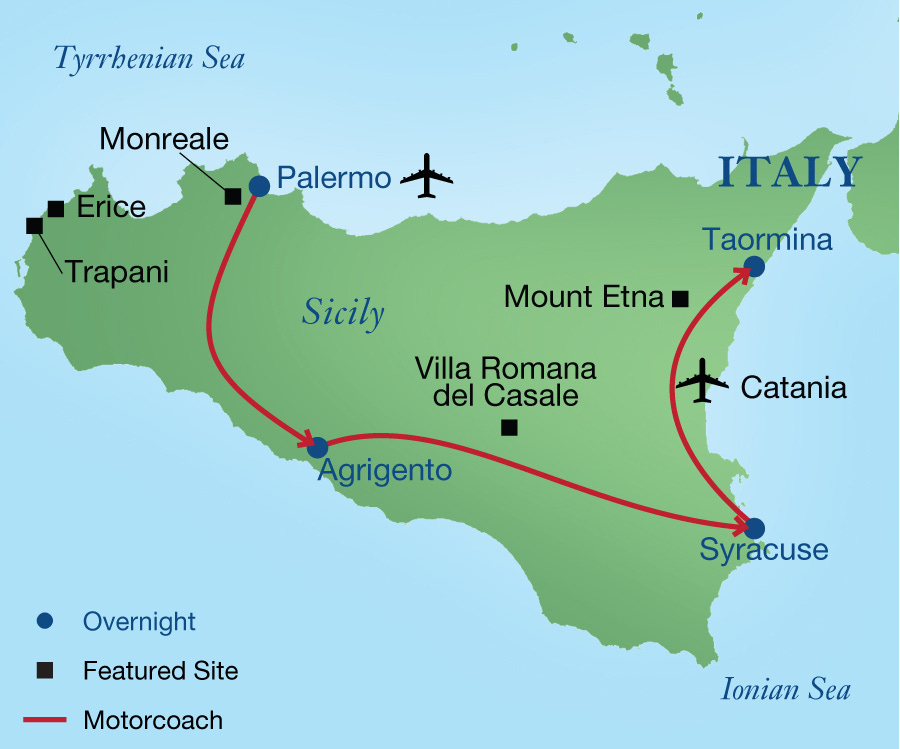
Sicily.
She started learning Italian and had already started researching apartments.
Italy was the plan.
How did she get here?
She had spent two years to get to this point.
Citizenship by descent application, genealogy research and of course the paperwork.
All of it pointed in one direction: Italy.
But then, she started reading about Italian taxes.
Not the 7% flat tax regime, but ones that apply when you’re an Italian citizen living in Italy.
Which meant:
26% on dividends.
Worldwide income reported and taxed by Italy.
Pensions taxed at progressive rates up to 43%.
Plus US filing obligations on top, because Americans pay taxes no matter where they live.
She looked at those numbers and said something that changed her entire plan:
“Why am I going someplace where I have to do more work? And pay more taxes?”
She realized that her plan was not as solid as she thought.
And suddenly, Italy went from “where I’m going” to “where I’ll visit.”
And then, the whole world opened up.
This is the story of what happened next.
What she built instead, and what her journey teaches about how to actually construct a life across borders.
Here’s what we’ll cover today:
Why getting a passport and living in that country are two different decisions
The exercise that reveals your real priorities (and how you can try it today)
What she is building now (and why it’s not just one country)
The Passport Trap
So Italy was out.
Two years of research, consulate appointments and Italian lessons pointed to one country that doesn’t make financial sense anymore.
One thing that she kept from her initial plan was this:
She is still getting her Italian passport.
By mid-2026, it should be official.
But she separated two things that most people treat as one.
Getting the passport.
Living in the country.
Getting an EU passport is a great move:
Visa-free access across the EU.
No Schengen limits or visa applications.
Freedom to travel, visit, stay for a few months.
But just because you are getting an EU passport doesn’t mean you automatically have to become a tax resident in that country.
After all, Americans are dealing with all sorts of tax forms in the US every year.
Doubling that workload in a tax-heavy EU country didn’t make sense.
So the plan changed to this:
Getting her Italian the passport
Staying in Italy under 183 days a year.
Avoiding any of the other criteria Italy has to assume her as a tax resident.
But her decision left her with a much bigger question.
If not Italy, then where?
She spent two years narrowing everything down to one country.
Now that country was off the table and every other country on earth was back on it.
She texted me:
“Do you have any advice for me? Somebody who could help me figure this out?”
I said: “That’s my job.”
That’s when we started working together.
If you are an American 50+ and want to emigrate within the next 0-5 years, and don’t want to navigate healthcare, banking, visas, taxes and country selection by yourself, reply to this mail with “RETIRE”.
You’ll get an invite to the “Retire Abroad Priority List” with some of my best tactics for retiring abroad.
Start With Yourself (Not a Country)
After Italy was off the table, she had the same reaction most people would have.
She started researching other countries.
Latin America, Europe, maybe somewhere in Southeast Asia.
She was collecting destinations (again), saving articles, reading blog posts and watching YouTube videos.
Same thing she did with Italy, just with different country names.
I told her to stop.
Not because the countries were necessarily wrong, but the order was wrong.
She was starting with “where”.
But we needed to start with “what”.
So we did an exercise.
I gave her 100 coins and three “buckets”.
Money.
Lifestyle.
Freedom.
She had to distribute all 100 across the three.
She needed to prioritize (even splits are not allowed).
She put 60 on Money. 30 on Lifestyle. 10 on Freedom.
That exercise alone told us a lot.
If saving retirement dollars is your #1 priority, moving to an EU country (as a citizen of that country) is a conflict.
Because residency programs (such as the 7% regime) are not for citizens, but for (you guessed it): Residents.
Once that was clear, the next step was non-negotiables.
These are the things that “kill” a destination immediately.
Her four non-negotiables:
Affordable live-in help with quarters for her family
English-speaking community
Dog-friendly infrastructure and housing
Simple, low-cost tax structure
If a country failed even one, it was out.
Italy failed #4 (and possibly others as well).
And so did a lot of other countries she’d been researching.
With this 2-part exercise alone, you can go from “the whole world is an option” to a handful of destinations in about a week.
What She Is Building Now
Over the next few weeks, we worked through her full situation.
Finances, fears, timelines, what she needs for her family’s care, and for herself.
The result was this:
Florida stays her base, meaning keeping her US address, bank accounts, and avoiding no state income tax.
Panama will be her new Plan B base. The Friendly Nations Visa suited her best, and she is also buying property there.
To further diversify her residency portfolio, she is getting the Thailand Privilege visa (Thailand’s version of a “Golden Visa”).
For EU access, she will be getting her Italian passport by mid-2026. This will only be a “lifestyle play” without significant ties to any EU country.
In addition, she moving a sizable portion of her money outside the US.
We found a suitable option in my network of specialists, who can facilitate the transfer to her new offshore accounts efficiently.
But countries and visas were not the biggest thing she got out of it.
She told me she finally understands how all the pieces connect.
How taxes, residencies, passports, and banking work together.
How to structure a life across borders without breaking something in the process.
Which mistakes to avoid and why people make them.
Before, she was collecting information.
Articles, Reddit threads, YouTube videos, bookmarks.
Lots of input, no structure.
She knew “a little about a lot” but not how any of the knowledge applied to her.
In her own words:
“Everything that I was working on on my own, when I worked with Ben it came together.
What This Means for You
Her situation is specific.
Her finances, family’s needs, Italian citizenship.
But the mistakes she almost made are universal.
She picked a country before knowing her priorities.
She assumed a passport meant she should live there.
She spent two years researching without a framework to evaluate what she was finding.
Most people start exactly where she started.
With a country.
That is not how it works.
A plan starts with you.
What does your money situation actually look like?
What can you absolutely not live without?
What scares you about this?
What are your priorities?
And only after being clear on all this, you go further.
She went from “the whole world is an option” to a solid global setup.
If you are interested to do the same, reply to this mail with “BLUEPRINT” and we can have a chat.
And whether we work together or not, I will give you some pointers for your specific situation that you can use on your journey.
Conclusion
That’s it.
Three things to take from her story:
Citizenship and residency are two different things, and one is not automatically “better” than the other.
Know your priorities before you pick a country, ideally by doing the “Coins Exercise” above.
Get advice for your move (whether that is from me or someone else) and don’t rely on research alone.
If you want to try the “100 Coins Exercise” right now, grab a piece of paper.
Draw 3 buckets: Money, Lifestyle, Freedom.
You have 100 coins. Distribute all of them. No even splits.
Where the coins land will tell you more about your next move than any country guide.
That’s it for this week.
Thanks for reading, and as always, appreciate having you here.
— Ben
PS
If you are an American 50+ and want to emigrate within the next 0-5 years, and don’t want to navigate healthcare, banking, visas, taxes and country selection by yourself, reply to this mail with “RETIRE”.
You’ll get an invite to the “Retire Abroad Priority List” with some of my best tactics for retiring abroad.
I found Ben on Substack a year ago and he so patiently answered my questions about Italy... 🤣🤣 After consulting with Ben, I catapulted forward with a real plan. In two weeks I will be at the visa office in Panama and doing the same in Thailand in October. And feeling relieved to have assets abroad in three different currencies, three different countries and multiple financial institutions. Ben was the lever that moved my dreams to reality! Thank you, Ben! 🤩
For my adventurous wife and me (less adventurous): RETIRE.
Born abroad, naturalized U.S. citizen. Thank you for opening our eyes to possibilities.