



I’ve written a lot about residencies as “tools”.
About getting your paperwork sorted before you need it.
About building options when everything is calm so you have them, before you need them.
I haven’t written much about citizenship by investment.
The $100k+ price tag puts it outside what most people are considering, and the industry is full of agent marketing dressed up as advice.
But the thinking behind CBI is the same thinking behind everything I write about:
Optionality.
Having doors open before you need to walk through them.
Darr Kadłubowski did something I haven’t done.
He spent $130,000 on a Vanuatu passport that ranks 88th in the world for visa-free access.
On paper, that sounds like a bad deal.
After reading his reasoning, I think his move is one of the cleanest examples of the optionality mindset I talk about here.
What I like about this piece:
He’s honest about who this isn’t for.
He’s skeptical of the industry selling it.
He’s specific about costs and timelines.
Most CBI content is either sales material or surface-level listicles.
This is different.
Darr is a Polish-American entrepreneur who went through the Vanuatu process in 2025 and documented the whole thing.
I’ll let him take it from here.
If you are between 50-75 and want to emigrate within the next 0-5 years, and don’t want to navigate healthcare, banking, visas, taxes and country selection by yourself, reply to this mail with “Retire”.
You’ll get a private invite to the “Retire Abroad Priority List” with some of my best tactics for retiring abroad.
And if you’re especially worried about what happens to your money when you leave the U.S. system, you can also reply “Money” and I’ll send you my US Expat Money Guide.
I Paid $130,000 for the 88th-Ranked Passport
Vanuatu’s passport ranks 88th globally for visa-free access.
I paid $130,000 for it anyway.
The low ranking was irrelevant for me.
I was not optimizing for total visa-free count, but solving for a specific strategic gap:
Visa-free access coupled with geopolitical neutrality that my American citizenship cannot provide.
Passport power rankings measure aggregate access.
They do not capture specific positioning requirements between blocs.
I became a citizen in June 2025, barely six months after the European Union formally revoked Vanuatu’s visa-free access to the Schengen zone, citing security and “migration” risks from its citizenship-by-investment program.
I would argue that someone who spends $130,000 for a passport is probably not migrating to Europe for the wages, but alas I do not set Schengen Zone policy.
This was the first time the EU fully revoked a visa-free agreement due to an investor citizenship program.
The EU revocation did not matter to my decision, as I was already solving EU access through my Polish background.
Vanuatu was never about Europe.
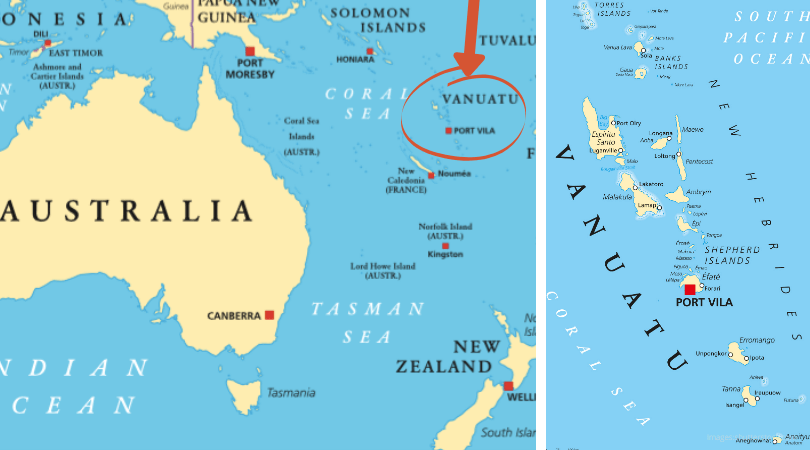
But the timing matters because it reveals the broader context:
Citizenship by Investment is under structural pressure.
Mere months after I became a citizen, Norway escalated.
Beginning in August 2025, Norwegian border officials denied entry to Caribbean CBI passport holders from Saint Kitts and Nevis, Dominica, Antigua and Barbuda, Grenada, and Saint Lucia, treating their passports as invalid despite formal visa-free status.
Notably, Vanuatu itself has escaped direct Norwegian border enforcement . . . so far.
Perhaps because Vanuatu’s beaches are considerably nicer than Norway’s, so the traffic pattern works in our favor.
The enforcement mechanism:
Border officials applied Norwegian passport issuance standards to foreign documents, declaring CBI passports invalid because applicants did not appear physically before authorities when applying.
Considering I renewed my American passport by mail, I may need to hop the (nonexistent) border fence keeping the Swedes out if I ever want to see Bergen.
Humor aside, larger states are constructing a two-tier citizenship framework where “natural” and “investment” citizens of the same country receive differential treatment at borders.
I bought Vanuatu citizenship understanding this reality, accepting that the utility could be revoked at any time by any major power that decides investment citizenship threatens their interests.
This is what buying a second citizenship actually looks like:
Strategic value for a specific use case, under active threat from the same powers whose mobility regimes it was designed to navigate.
What follows is an analysis of why CBI remains valuable despite mounting pressure, what the process reveals about citizenship as an instrument rather than identity, and what small states are leaving on the table by treating these programs as revenue extraction rather than sovereignty-building tools.
The Strategic Gap: Why Vanuatu
I hold US citizenship.
Polish citizenship is pending via application.
Both could be politely called “high-visibility” passports in Eastern Europe.
But what I needed was a persistent, visa-free access without the baggage that comes with a passport associated with specific foreign policies.
Operating in the region, whether for business, policy research, or intellectual exchange, requires the ability to move without the friction Western citizenship creates.
Every border crossing with a US passport in high-friction jurisdictions comes with assumptions about background, politics, and (sadly) the risk of a classic shakedown in some countries.
These assumptions are not paranoia.
They are rational responses to documented realities of how countries look at people when they hand their passport over at the border control booth.
The question is not:
“Can I get in?”
The question is:
“What does this passport signal about me, and what assumptions does it create?”
Standard CBI advice optimizes for aggregate visa-free count.
Malta delivers EU access. Caribbean programs (St. Kitts, Dominica, Antigua) provide strong Western hemisphere and Gulf coverage.
But they do not solve eastward access, and they carry geopolitical markers.
Caribbean programs are perceived as US-adjacent in spaces where that distinction matters.
Malta ties you to EU institutional structures and the geopolitical assumptions that come with them.
Vanuatu checked three requirements:
Visa-free to countries not covered by my American passport
Geopolitically neutral; no formal alignment with any major power bloc
Fast acquisition timeline (under three months)
On tax optimization:
Don’t get your hopes up.
Americans are in the privileged position to be among one of only two peoples compelled to pay taxes on their global income (a prestigious position we share with the other major financial powerhouse, that being Eritrea).
You can collect passports like trading cards, the IRS will still expect its cut on your worldwide income.
While my British friends are enjoying 0% tax in the Dubai Marina, I am forever tied to sending 41% of it back to Uncle Sam.
As an American, the decision becomes purely about geopolitical positioning and mobility access.
Neutrality as Strategic Doctrine
Geopolitical neutrality is not merely the absence of baggage.
It is a deliberate positioning choice in a global environment where passport signals matter as much as passport access.
When you present a US passport at a any border, you are immediately identified with US foreign policy.
This creates friction.
Not because of your individual background, but because of assumptions about what passport you carry.
Border officials, business counterparties, and regulatory authorities respond to the document, not to you.
When you present a Vanuatu passport, there are no preloaded assumptions.
Vanuatu has no sanctions regime, no military alliances, no contested claims.
The passport signals nothing beyond “this person is legally a Vanuatu citizen”.
What matters:
The passport you carry increasingly determines market access, regulatory treatment, and personal exposure.
Neutral citizenship becomes a positioning tool, it doesn’t eliminate scrutiny, but it manages the initial assumptions and institutional friction that come before anyone looks at your actual record.
Small state citizenship as a strategic instrument has historical precedent:
Irish passports during the Cold War.
Swiss neutrality in European conflicts.
Singapore’s careful non-alignment despite Western economic integration.
The innovation of modern CBI programs is that they have made this positioning accessible through investment rather than ancestry, residence, or naturalization timelines.
The vulnerability, as Norway and the EU are now demonstrating, is that major powers can simply refuse to recognize this neutrality when it becomes inconvenient.
The Process Is Genuinely Fast (But Legitimate)
Timeline from initial contact to passport in hand:
11 weeks.
May 18: Initial consultation
May 21: Document submission
May 22: First payment
May 27: Interpol clearance (9 days)
June 3: Second payment
June 4: Financial Intelligence Unit (FIU) clearance
June 11: Citizenship granted (under 4 weeks from application)
June 12: Final payment
July 7: Citizenship certificate
July 10: Oath of citizenship
July 23: Passport issued
August 7: Passport received
The industry markets “1-2 months.”
This is accurate if you measure citizenship conferral and stop counting.
Passport delivery adds another two months for administrative processing and international shipping.
Agents are not misrepresenting, they are answering the question: “when do I become a citizen” rather than “when can I use this for travel.”
A subtle but meaningful distinction if you have meetings scheduled.
Payment structure de-risks the investment.
Which means you are not transferring $130,000 blind.
Three installments are tied to clearance gates:
First payment after document submission.
Second after Interpol clearance.
Final after citizenship grant.
If something flags during due diligence, you are not committed to the full amount.
I was lucky to have completed an unrelated visa application just before this process so I had most of my documentation on hand already.
Due diligence was legitimate.
I have a completely clean background.
No criminal record, no sanctions exposure, no violations (except for an egregious amount of skipping class in 9th and 10th grade, but it appears that our “permanent record” lapses at graduation).
I also spent years in compliance work, including writing the book on crypto compliance in the UAE.
I know what thorough vetting looks like.
Vanuatu’s Interpol and FIU checks were professional and substantive.
Who Does This Actually Work For?
The profile this serves is narrow for Americans, but when Vanuatu works for you, it works well.
Start with what I was solving for:
Expanded access where my US passport creates immediate friction, coupled with geopolitical neutrality that neither American nor Polish citizenship provides.
I was not optimizing for tax.
I was not chasing an aggregate visa-free count.
I was solving a specific positioning problem in a specific region.
That use case generalizes to a clear profile:
Someone who needs to operate in spaces where their primary citizenship creates assumptions they cannot afford, who has already solved access to other regions through different means, and who understands they are buying contingent utility that can be revoked at any time.
Who Should Look Elsewhere?
Maltese citizenship or a digital nomad visa in Croatia is a better path if you want easier access to Europe.
If you’re from a country with a weak passport and want better visa-free access in general, your existing passport may already be more powerful than my new one, and the Caribbean programs offer better aggregate coverage.
And if you’re an American hoping to reduce your tax burden (my lawyer prefers I use the term “reduce my adjusted taxable income basis”), a second citizenship won’t help.
Also, it certainly does not work for anyone who assumes CBI confers permanent privileges.
Vanuatu lost EU access six months before I became a citizen.
Caribbean programs face mounting Schengen pressure.
Norway is already discriminating at borders despite formal visa-free agreements.
CBI holders face skepticism from border officials, financial institutions, and regulatory bodies. (I’m sure someone at my bank’s compliance department will have an aneurysm when they read this article).
If you cannot survive that scrutiny, or if the friction exceeds the value of the access you are buying, this deal does not make sense for you.
Where Did My Money Go?
Part of the $130,000 goes to a development project.
In my case, a green bean plantation.
I have received zero updates on my beans.
I have no idea if the beans are growing.
I worry they are not.
I suspect nobody else knows either.
I can theoretically reclaim this investment in five years with an expected IRR of ~3%. US Treasury bills are yielding 5% risk-free.
Either the green bean farmers are capturing a massive spread (congrats to them), or (more likely) CBI investment requirements are regulatory compliance theater with a weak connection to actual economic development.
Whatever it is, the last time I heard from Vanuatu was when my passport arrived in the mail.
They have my resume, they have my email address. I don’t believe anyone is asking what’s next.
In truth, I don’t think CBI programs have a “next”, and this is why CBI programs are sitting on two unrealized assets:
The capital itself, and the network of people providing it.
The capital problem:
Programs are raising funds from globally-connected entrepreneurs who deploy capital professionally, who have networks across multiple jurisdictions, who could function as LPs or advisors in growth-stage investment vehicles.
Instead of pooling this into sovereign venture funds that invest in Vanuatu startups, infrastructure, or export-focused businesses with compounding returns, the money gets scattered into random agricultural projects and real estate developments that generate one-time construction employment and negligible multiplier effects.
The network problem:
Consider who buys citizenship through investment . . . entrepreneurs operating businesses across multiple jurisdictions, people solving specific geopolitical positioning problems that passport rankings do not capture, high-agency individuals with cross-border families and operations, people sophisticated enough to navigate international compliance and citizenship law.
This is a high-value network. And it never meets.
There is no CBI holder summit. No directory. No deal flow channel. No investment syndicate. No advocacy network.
The solution is obvious:
Establish a Vanuatu sovereign VC fund capitalized by CBI investments.
Target early-stage companies in sectors where Vanuatu has competitive advantages or strategic needs: ocean tech, climate resilience, digital services, offshore finance. Leverage the expertise and networks of CBI holders as LP advisors. Target 15-20% IRR. Create an entrepreneurial ecosystem that compounds over time rather than extracting revenue once.
This would accomplish multiple objectives simultaneously:
Deliver actual returns to investors rather than participate in compliance theater
Build real economic capacity in Vanuatu rather than temporary construction jobs
Create a sophisticated diaspora advocating for Vanuatu in international business and policy circles
Strengthen the legitimacy argument for CBI programs by demonstrating tangible development outcomes and ongoing community engagement
Small states, under immense climate and economic threat, have used CBI programs as a revenue generation tool.
This is their right as sovereign nations.
This is also a failure of strategic imagination.
These programs could be sovereignty-building tools:
Creating investment ecosystems, building diaspora networks, developing institutional capacity. Instead they function as one-time passport sales with no compounding effects.
The EU cited security concerns when revoking Vanuatu’s visa-free status.
But the structural critique is economic: CBI programs look like passports-for-cash schemes because that is how they are structured.
If Vanuatu (or any other CBI nation) builds a track record of deploying CBI capital into measurable development outcomes, the EU’s arguments would face more resistance.
As implemented, the programs validate the critique.
They are selling a product when they could be building an institution.
Conclusion
Citizenship-by-investment works.
Vanuatu’s works exceptionally well and every step of the process was handled efficiently and professionally.
I believe it’s the right of every nation to extend citizenship how they see fit.
The process is legitimate when executed through professional agents.
For narrow use cases CBI delivers real strategic value.
But the industry is leaving compounding value on the table. Small states treat these programs as revenue extraction when they could be building institutions: sovereign VC funds, diaspora networks, entrepreneurial ecosystems.
The capital exists. The network exists. The infrastructure does not.
Western pressure on CBI programs will continue.
Norway’s border discrimination and the EU’s Vanuatu revocation are precedents, not anomalies. The two-tier citizenship structure is emerging. This does not invalidate the strategic logic of CBI, it clarifies the trade. You are buying contingent access, held at the discretion of powers who can revoke it when geopolitically convenient.
For someone who needs what CBI provides, that trade may still be worth making.
For me, it was worth it then, now, and likely into the future.
The question is not whether these programs are legitimate (they are).
The question is whether small states will evolve them into sovereignty-building tools, or whether they will remain passport sales that validate every critique major powers level against them.
And even if they don’t, I would still rather spend July on Vanuatu’s beaches instead of Norway’s.
Completely agree.
Too many people focus almost exclusively on visa-free access when evaluating a second passport. History has shown that visa-free agreements can change overnight, and Vanuatu is a perfect example of that.
What I don’t understand is why some people are willing to pay $250k+ for a Caribbean passport primarily because it offers visa-free access to the EU.
A strategy that makes more sense to me is using a lower-cost CBI program, such as Vanuatu, São Tomé or Sierra Leone, as a foundation and then obtaining EU access through a Golden Visa. For a similar overall budget, you could end up with a second passport and a qualifying real estate investment in a country like Greece. The difference is that the property remains an asset you own and may even appreciate over time.
To me, the real value of a second passport isn’t just travel freedom. It’s geopolitical diversification and having a genuine Plan B. You buy it when you don’t need it, because when you do need it, it may already be too late.
That’s also why I think Vanuatu is often underrated. People focus on the Schengen loss, but overlook the value of holding a passport from a tax-friendly country where you always have the unconditional right to enter, reside and build a life if circumstances ever change.
oh come on.. you really think you will fool any custom / border law enforcement when you show up in Russia or elsewhere with a Vanuatuan passport? somehow i do not believe they will believe you are an original pacific islander who wants to visit Russia..