


Thailand is a retirement destination many people talk about, but few actually figure out.
The appeal is obvious.
Low costs, good healthcare, warm weather year-round.
But between visa requirements, foreign bank accounts, insurance that actually works abroad, and keeping the IRS happy, many stall out in the research phase.
They read the same generic blog articles, watch YouTube videos from people who’ve been there six months, and end up more confused than when they started.
Mike and his wife figured it out. (Names changed for privacy.)
I’ve known them for a few years now.
They’re an American couple who’ve been living in Thailand for over a decade.
Not digital nomads or “visa-hoppers”.
Retirees on a pension who wanted a system that works without constant maintenance.
Today I’m breaking down exactly how they set it up:
The visa choice that simplified their life in Thailand
Their banking setup (and why they skipped the middle layer)
How they locked in healthcare coverage before it got expensive
Let’s get into it.
The Profile
They didn’t set out to become expats.
He and his wife first came to Thailand for volunteer work.
They liked it.
The weather, the food, the pace of life.
So they came back. And then again.
At some point, Thailand stopped being a trip and started being home.
They’re both in their 60s now, collecting a pension and Social Security.
They kept their US citizenship and never seriously considered giving it up.
Over half the year they are in Thailand.
The rest of the time, back in the States visiting family or traveling.
When I asked Mike about his approach, he laughed.
“We’re not trying to be clever,” he said. “We just want it to work.”
No complicated offshore structures or anything out of the ordinary.
They file taxes like any American would.
The difference is they get to live somewhere warm for half the price.
Their approach would fall under the category of “Snowbird” in this article:

What impressed me most was how relaxed he is about the whole setup.
Their visa renews, the money flows from A to B and healthcare is sorted on both sides of the Pacific.
Let’s have a look at their setup.
Stuck on your moving abroad process? You can book an hour with me here.
Visa Strategy
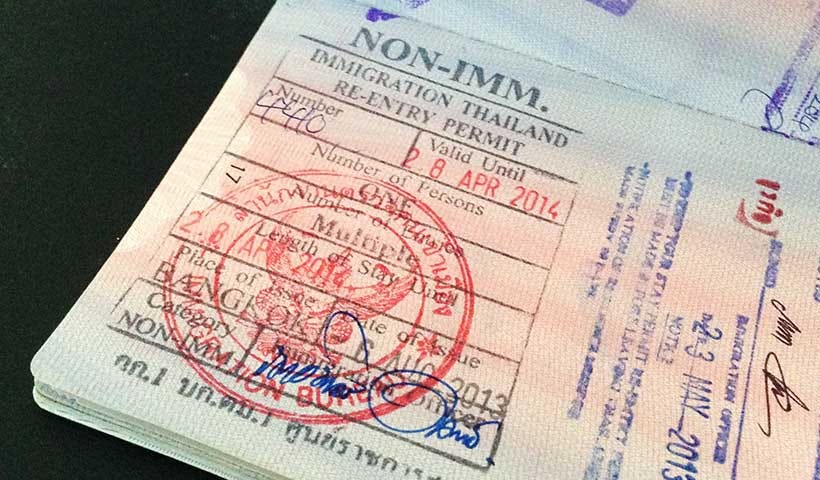
Mike and his wife started on volunteer visas.
It made sense at the time.
They were doing volunteer work, and the visa matched what they were doing.
But the paperwork was a headache.
Quarterly reports.
Every few months, more bureaucracy.
Restrictions on what they could and couldn’t do.
Then the rules changed.
Thailand started allowing retirees on retirement visas to do volunteer work.
They switched from their volunteer visa to the retirement visa, which simplified everything.
Thailand has different types of retirement visas, the O-A and the O-X.
The O-X is available to citizens of 14 countries (the US is one of them) who are over 50 and can show 3 million Thai baht (around $95k) in a Thai bank account, or a combination of 1.8 million baht in deposits (around $57k) plus annual income of at least 1.2 million baht (around $38k)
The O-X has a higher bar than the standard O-A, but it comes with a key benefit:
Holders can do volunteer work, as long as it's approved by Thailand's Department of Employment.
“We just hand it off to our visa agent once a year,” Mike told me. “She handles the renewal, we sign what we need to sign, and we don’t think about it again.”
Banking Abroad

Banking abroad intimidates people more than it should.
I’ve written before about the three-account setup:
US account, an international middle layer like Wise, and a local account in your destination country.
Flexible and works almost anywhere.
Mike and his wife use something even simpler.
Their US income never touches a Thai bank.
They just pull cash from ATMs as they need it.
The US side: Charles Schwab
Pension and Social Security land here. Schwab is their financial “home base”.
Why Schwab? Two reasons.
First, Schwab is expat-friendly.
Some US banks get nervous when you live abroad.
They freeze accounts, ask uncomfortable questions, or close you out.
Schwab is used to customers with foreign addresses.
Second, the ATM rebates.
Schwab reimburses all ATM fees worldwide. Mike estimates this saves them around $500 a year.
When they need Thai baht, they walk to an ATM. No currency conversion apps, just cash in hand.
The Thailand side: Bangkok Bank
They do have a local account, but not for their US income.
They own a condo in Thailand that generates rental income. That money goes into Bangkok Bank.
This is the part that makes their setup work so smoothly.
The rental income covers things that are hard to pay in cash: rent, utility bills, anything that needs a bank transfer or QR code.
Their US money stays in the US for cash spending. Their Thai income handles the rest.
What if you don’t have local income?
Their situation is specific.
Without that Thai rental income, they would need another way to get money into a local account for non-cash payments.
That’s where a middle layer like Wise comes in. Otherwise you would be paying rent in cash every month.
Not impossible, but also more hassle.
Takeaway: If you are abroad without a local income stream, the three-account system is probably your better bet.
If you’re an American 50+ with a meaningful retirement nest egg and you’re seriously thinking about retiring abroad in the next 0–5 years, hit reply and write “RETIRE”.
You’ll get a private invite to the “Retire Abroad Priority List” with some of my best tactics for retiring abroad.
Healthcare Abroad

Healthcare is the thing that keeps people from pulling the trigger.
Mike and his wife solved this years ago.
Their approach is what I would call “Private Primary”.
They carry global private insurance as their main coverage and keep Medicare for when they are back in the US.
The key was timing.
They locked in their global policy before either of them turned 60.
Premiums jump after 60.
By getting in early, they secured a rate of around $400 per month combined.
That covers both of them, anywhere in the world, for major medical events.
Note that this is very basic coverage.
Routine care is a different story.
Their policy does not cover dental cleanings or doctor visits for a cold, and that’s fine.
In Thailand, a doctor visit might cost $30.
Dental work costs a fraction of US prices.
Insuring the small stuff would cost more than just paying out of pocket.
When they are back in the States visiting family, Medicare comes in.
Two layers, two continents, fully covered on both.
One thing Mike emphasized:
Global health insurance is a specialized market, and a bad plan can leave you exposed in ways you won’t discover until you’re filing a claim.
His advice is to find a broker who works specifically with expats.
Someone who knows which providers actually pay out.
They found theirs through the expat community in Chiang Mai, and it saved them weeks of research and guesswork.
Takeaway: Get your global coverage before you turn 60. The savings compound for decades.
Disclaimer: I’m not a tax advisor. I’m a guy who’s spent years figuring these things out the hard way. This is educational, not personal/tax advice.
How They Pay Taxes
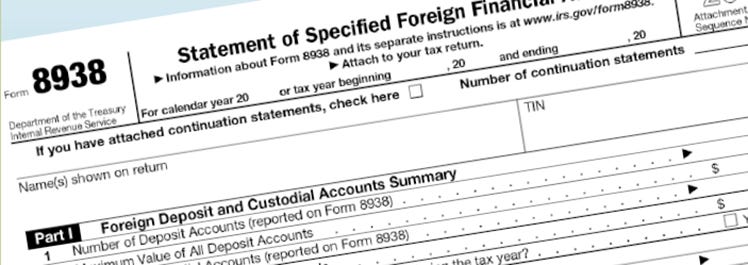
Mike’s tax situation is simpler than you would expect for someone living abroad more than half the year.
He and his wife pay full US federal and state taxes.
Pension income, Social Security, all of it.
They file like any American would.
Thailand technically considers them tax residents.
They spend more than 180 days per year in the country, which crosses the threshold.
But here’s where it gets interesting.
The US and Thailand have a Double Taxation Agreement.
Social Security is exempt.
Under the Double Taxation Agreement between the US and Thailand, Social Security payments are not taxed by Thailand.
The pension stays in the US, and is therefore not “remitted” to Thailand.
And Thailand only taxes foreign income that’s actually brought into the country (remitted = brought into the country).
Between the rental income from their condo and cash from ATM withdrawals, they have what they need locally.
The only Thai taxes they deal with are on the local rental income.
That gets withheld locally, and they file for a small refund each year.
Takeaway: Check the tax treaties for your specific situation in your desired destination (in case you become a tax resident).
What Else?
At the end of our call, I asked Mike what advice he’d give to someone starting from scratch.
Here’s what he said.
Expect the hassles, but don’t let them stop you.
Opening a foreign bank account takes longer than it should. Visa paperwork is tedious. You’ll spend a few afternoons doing things that would take ten minutes back home. Know this going in and it won’t throw you off.
Ignore the doomsday headlines.
Every few months someone writes an article about Social Security collapsing or benefits getting cut for expats. Mike’s been hearing this for a decade. “Still waiting,” he said. Don’t let fear of unlikely scenarios keep you from preparing for the move you actually want to make.
Keep your structure simple.
The more complex your setup, the more things can break. Mike doesn’t have offshore trusts or multi-country tax strategies. He has a Schwab account, a Thai bank account, a visa, and a couple of professionals who handle the stuff he doesn’t want to think about.
Find the right people before you need them.
A good tax advisor and a good insurance broker save you years of trial and error. Mike found his through the expat community after he moved. It worked out, but he wishes he had them lined up earlier.
This is one of the reasons I built the Retire Abroad Blueprint. People you can call instead of spending months searching forums and hoping for the best.
If you are interested in moving abroad the right way and without surprises, reply with “Blueprint” and we can have a conversation.
That’s it.
Mike and his wife did not follow a complicated playbook.
They found a visa that fit their life, kept their banking simple, locked in healthcare before it got expensive, and hired professionals for things that matter.
And so can you.
Thanks for reading, and as always, appreciate having you here.
— Ben
PS
If you are an American 50+ and want to emigrate within the next 0-5 years, and don’t want to navigate healthcare, banking, visas, taxes and country selection by yourself, reply to this mail with “RETIRE”.
You’ll get an invite to the “Retire Abroad Priority List” with some of my best tactics for retiring abroad.
RETIRE
Thanks for another great country case study. Appreciate it.