


Plenty of people who call me about Europe are choosing between the same three countries:
Portugal, Spain, and France.
Until a few years ago, Portugal was the deal.
Then it ended NHR, the 10-year tax holiday, and the deal got a lot smaller.
Still, moving on the D7 visa remains one of my favorite setups in Europe.
Spain is still incredibly popular.
But Spain is also one of the few countries that impose a wealth tax, amongst other things that need careful planning and sequencing.
Today, I want to look at France as the third option, and evaluate what it does better than the other two, and where it falls short.
I’ve been to Paris, to Lyon and to Montpellier myself (Paris was my least favorite).

One thing I noticed in conversations with expats from both countries is this:
In Portugal, the conversation is about what the country costs.
In France, the conversation is about what the country is.
The food, trains, healthcare, the fact that a small town of 3,000 people still has a bakery, a pharmacy, and a Tuesday market.
Two angles I want to include in this article.
One is the U.S.-France tax treaty, which can be very favorable for Americans.
Note: No tax or financial advice. Always consult with a qualified professional before you make financial decisions.
The second one is the public healthcare system.
The fact that it takes you in after three months can make a big difference, if healthcare is one of your top priorities.
While researching, I found three things you won't find in the usual France guides.
The official answer France gave on remote work just four weeks ago, the legal reason retirees are exempt from the new renewal cap, and the “payroll trap” that might changes your work-from-France plan.
Apart from that, here’s what we’ll cover today:
The visitor route step by step: income, insurance, paperwork, renewals and things to watch out for
How five years of residency turns into the 10-year card, and when citizenship follows
How healthcare and taxes actually work for an American retiree in France, and what each has in benefits
Let’s start with why France, and who this guide is for.
Why France and who this guide is for
France is a good choice if you want to live in Europe on your own income, with healthcare that will not bankrupt you.
The main residency route asks for stable income with a manageable threshold.
Social Security, pensions, IRA distributions, and investment income all qualify.
There is no need for a job offer (on some routes you’re not allowed to work at all), and you don’t need to park six figures in a fund somewhere.
Passive-income visas like this are standard across southern Europe.
Portugal’s D7 asks for about €920 a month, Spain’s non-lucrative visa wants €2,400, Greece wants €3,500, and Italy’s elective residence visa wants around €31,000 a year.
France sits near the bottom of that range.
The difference is how your income sources are treated, once you live there.
Portugal now taxes American pensions at normal progressive rates, since the NHR tax holiday closed to new applicants.
Spain has a wealth tax, and although it does not tax all income directly, the amounts you receive are added to the total taxable amount (this is called “exemption with progression” which the tax nerd in me has to mention).
France, under the US treaty, leaves most American retirement income alone.
Add public healthcare from month three, and France wins in some categories, compared to its neighbors.
Healthcare deserves its own paragraph.
When I asked 25 of my clients and callers in June what worried them most, 10 said they had no idea how healthcare works outside the US.
France answers that question better than almost anywhere, and we will get into the specifics further down.
Who this guide helps:
You are retired (or close) and live on a pension or Social Security.
You are financially independent and fund your life from savings or investments.
You work remotely for a U.S. company and want to know whether the visitor route covers you.
You own or want a second home in France and keep hitting the 90-day Schengen wall.
Your spouse or partner is French or holds French residency, and you plan to join them.
You have wanted to live in France for decades and want to know what it takes.
What you will get:
A simple map of viable routes for the above use-cases.
The status each route leads to and the rights it gives you.
Typical timelines, costs, and common delays.
Official links so you can verify every step.
What to know up front:
France is not a citizenship-by-descent country like Ireland.
France is residency-first:
You move
You live there
You earn permanent residency (and later, citizenship)
Where Ireland has “Stamps,” France has the “titre de séjour” system.
We'll break down the residency cards you'll actually deal with when we get to the routes.
What this guide will not do:
It will not sell you shortcuts or loopholes (never have, never will).
It will not bury you in legal jargon (plain and clear language only).
It will not go deep on tax (but you get the essentials and the sources to check).
Rules change and consulates differ. Confirm the details with your consulate or a French immigration lawyer before you act.
The next sections walk you through your options with clear steps and timelines.
The cards you’ll deal with
France works with three documents, and the whole system makes sense once you see how they are connected.
The long-stay visa (VLS-TS) is your entry ticket.
You apply at a French consulate in the US before you move, and once you validate it online after arrival, it doubles as your residence permit for year one.
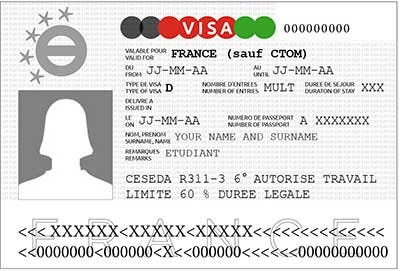
The carte de séjour is the renewable residence card you switch to from year two.
For the visitor status this card is annual, every year, by law.
France has multi-year cards (2 to 4 years) for employees, students, and family statuses, but the visitor category is explicitly excluded from them.

The carte de résident is the 10-year card, available after five years of continuous residence.
This is the card that ends the annual paperwork.
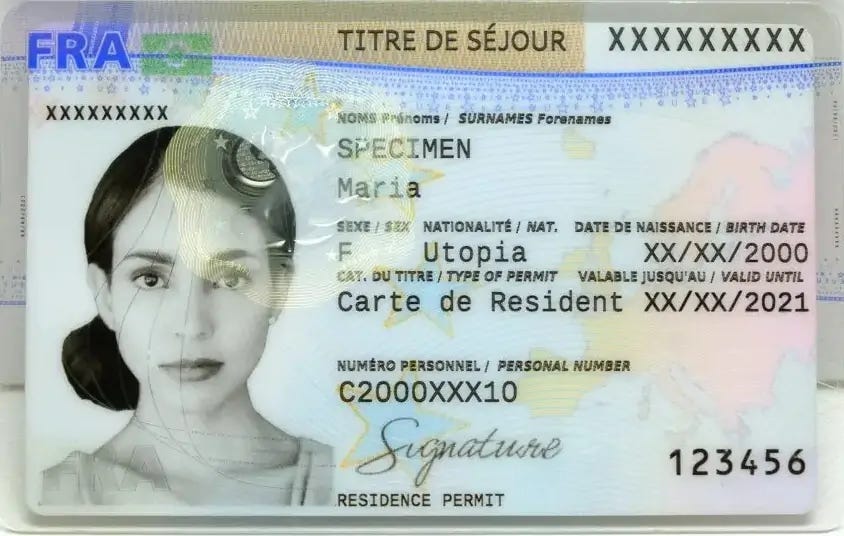
A simple example:
Arrive with a one-year visitor visa, validate it online within three months, renew it each year through ANEF (France’s online immigration portal), and after five years you apply for the 10-year card.
Every route in this guide is a variation of that skeleton.
Route 1: the long-stay visitor visa
This is the retiree route, and the main event of this article.