


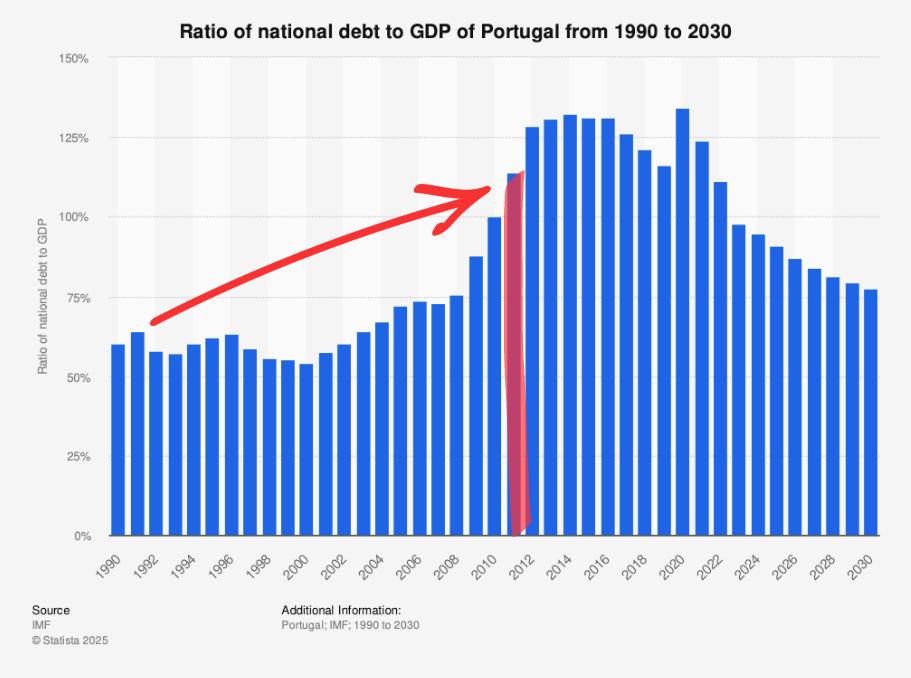
In 2011, Portugal was broke.
The country had just taken a €78 billion bailout from the International Monetary Fund and the European Union.
Unemployment was at 12% and climbing.
Debt-to-GDP at 111%, up from 68% just four years earlier.
Young Portuguese were leaving for Germany, the UK, anywhere with jobs.
So Portugal made an offer.
The following year, in October 2012, the government launched a program with a name that said exactly what it was: The Golden Visa.
Put €500,000 into Portuguese real estate or investment funds.
Visit for just seven days a year. After five years, apply for citizenship. Get an EU passport.
Tens of thousands of people said yes.
They wired hundreds of thousands of dollars to Portuguese banks, flew to Lisbon for biometrics appointments, and restructured their lives around a promise:
Five years to citizenship.
Then, on December 15, 2025, Portugal changed the deal.
The Constitutional Court upheld a new law doubling the citizenship timeline from 5 years to 10. Four provisions got struck down for sloppy drafting, but the 10-year wait stays.
Parliament will clean up the language and pass it again, probably by early 2026.
People who already submitted applications should keep the old rules. But for new applicants, the finish line just moved five years further away.
This might seem like an anomaly, but it’s not.
Here’s what we’ll cover today:
How Portugal went from desperate to dismissive in 13 years
Why this keeps happening across Golden Visa programs worldwide
What smart expats do differently (and why your Plan A needs a Plan B)
How We Got Here
Countries don’t sell citizenship when things are going well.
They sell it when they’re desperate.
If you want to understand why Portugal just doubled the wait time for their passport, you need to see where this promise came from.
#1 The Crisis
Portugal hit rock bottom in 2011.
The government couldn’t refinance its debt, and bond yields had spiked into double digits. In April 2011, Prime Minister José Sócrates announced on national television what everyone already knew: Portugal needed a €78 billion rescue from the IMF and European Union.
It was the third eurozone bailout, after Greece and Ireland.
The conditions were painful.
Raise taxes.
Cut public wages.
Sell off state assets.
Slash the budget deficit from 10% to 3%.
The economy shrank for three consecutive years. Nearly 500,000 Portuguese emigrated between 2011 and 2014, the largest exodus the country had seen in 50 years.
Takeaway: When a country is this desperate, it will promise almost anything to attract foreign capital.
#2 The Promise
Portugal launched the Golden Visa in October 2012.
The country was still deep in crisis, locked into austerity conditions, watching its young people leave. Traditional investors wanted nothing to do with Portuguese bonds.
But people from outside the EU? They saw something different.
A European foothold at a discount.
The terms were generous. Invest €500,000 in real estate or qualifying funds. Spend just seven days a year in Portugal. After five years, apply for citizenship. Get an EU passport with visa-free access to 27 countries.
The money came in fast.
By September 2023, the program had brought in over €7 billion from more than 12,000 primary applicants and their families.
Takeaway: Offering citizenship is a transaction: your capital for our passport.
Stuck on your moving abroad process? You can book an hour with me here.
#3 The Warning
In October 2023, Portugal made its first move.

The government passed the “Mais Habitação” law and eliminated real estate as a qualifying Golden Visa investment. No more buying apartments in Lisbon. No more renovation projects in Porto.
The housing crisis had become a political liability, and foreign buyers made an easy target. Investors already in the program kept their deals.
But the signal was clear: Portugal had taken the money, stabilized the economy, and was now rewriting the terms.
The country that once rolled out the red carpet was starting to roll it back up.
At the time, most Golden Visa holders shrugged it off. Fund investments still qualified. The five-year citizenship path remained intact.
The core promise hadn’t changed (that would come two years later).
Takeaway: When a country starts tightening the rules, it rarely stops at one change.
#4 The Betrayal
On October 28, 2025, Portugal’s parliament voted 157 to 64 to double the citizenship timeline from five years to ten.
But the timeline change wasn’t even the worst part.
Under the new law, your citizenship clock doesn’t start when you apply for residency.
It starts when you receive your residence card.
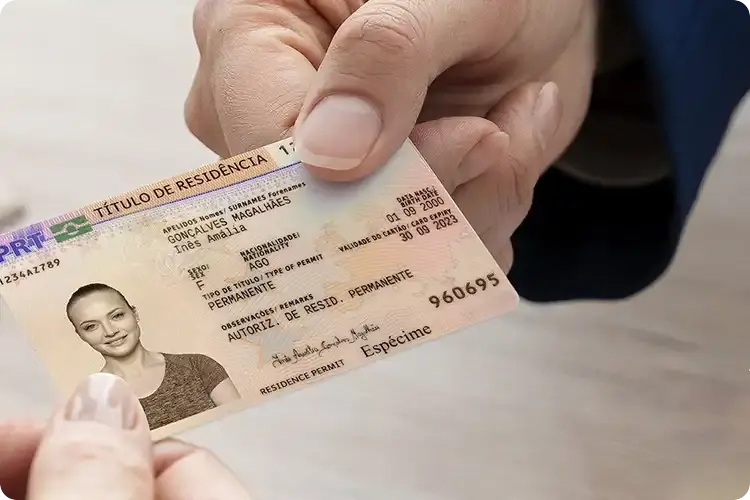
That’s a critical distinction, because Portugal’s immigration agency (AIMA) has a massive backlog.
People who applied in 2022 are still waiting for first appointments.
The average wait right now?
Two to three years just to get your card in hand.
Do the math: three years waiting for your card, plus ten years after you get it. That’s thirteen years from application to citizenship eligibility.
Who does this affect?
People who already submitted applications should keep the old rules. Portuguese law has a strong principle of non-retroactivity.
For anyone with a residence card who hasn't applied for citizenship yet, the situation is unclear. New applicants face the worst case: the full thirteen-year timeline.
The Constitutional Court reviewed the law on December 15 and struck down four provisions for poor drafting. But the 10-year timeline survived. Parliament will revise the language and vote again.
The change is coming.
Takeaway: What a government promises today, it can revoke tomorrow. This doesn’t only apply to Portugal.
If you’re an American 50–75 with a meaningful retirement nest egg and you’re seriously thinking about retiring abroad in the next 0–5 years, hit reply and write “RETIRE”.
It’s Not Just Portugal
You might think:
“Well, this is an exception. Portugal had a specific problem. Other countries wouldn’t do this.”
They already have.
In the past four years, the UK, Ireland, the Netherlands, and Spain have all ended their Golden Visa programs. Portugal eliminated real estate as a qualifying investment. Greece doubled or tripled the minimum threshold in popular areas. Cyprus shut down its citizenship scheme after a corruption scandal.
The pattern is always the same.
A country needs foreign capital.
It launches a residency program with generous terms.
The money flows in.
Then the political winds shift, and the government rewrites the rules.
Why do governments make these changes?
The arguments sound reasonable:
Housing affordability
In Lisbon, Porto, Barcelona, and Dublin, locals blame foreign buyers for driving up prices. Politicians promise to protect citizens from getting priced out of their own cities.
Security concerns
The EU has pushed member states to crack down on Golden Visas. The official worry: money laundering, tax evasion, and wealthy individuals from sanctioned countries buying their way into Europe.
Programs that underdelivered
Some governments argue the economic benefits never materialized. Ireland said its program attracted investors but not actual residents who’d contribute to the economy.
These arguments aren’t made by crazy people.
They might even be partly true.
But here’s what they don’t explain:
If housing is the issue, why did Golden Visa buyers represent less than 1% of real estate transactions in some of these countries?
In Spain, with roughly 3,200 Golden Visas issued against 584,000 total home sales in 2023 (per INE data), these purchases represented less than 1% of the market.
Ending the program won’t fix a housing crisis caused by Airbnb, underbuilding, and stagnant wages.
If security is the concern, why punish everyone instead of improving due diligence?
There’s an obvious solution: better vetting.
But rigorous due diligence is slow, expensive, and rejects applicants.
That doesn’t pair well with brochures promising “residency in 90 days.”
So governments had the choice: a) Run a serious program with proper screening, or b) a revenue program with “security theater”.
Guess what most of them did.
And if the program wasn’t delivering value, why did they take a decade of investor money before deciding that?
The real answer is simpler.
These programs are politically convenient to launch during a crisis and politically convenient to end when the crisis is over.
People migrating (without Portuguese passports) aren’t voters. They don’t march in the streets.
And they are easy to sacrifice when the political math changes.
Before you wire $500,000
Golden Visa programs aren’t scams.
But 50,000 visa holders in Portugal just learned how fast the terms can change.
They hired lawyers, wired €500,000, collected residence cards, and followed every step exactly as designed.
They still got burned.
Before you commit to any program, ask these 6 questions.
1/ Would you actually want to live there?
Not for the passport or the tax break.
If the citizenship path vanished tomorrow, would you still want to spend time in this country?
If the answer is no, you are making a bet, not building a life. If the scheme goes away, you have a visa for a country that you don’t want to live in.
2/ Can you get out if the rules change?
Portugal’s fund investments locked capital for five years.
Real estate takes months to sell (on a good day).
When thousands of real estate holders panic at once, you’re competing against everyone trying to liquidate simultaneously.
Know your exit before you sign anything.
3/ What’s the program’s track record?
Portugal launched in 2012 and eliminated the real estate route by October 2023.
Spain ran 12 years before ending entirely.
The UK’s Tier 1 lasted 14 years before shutting down in February 2022.
If a program is brand new, you’re the guinea pig.
If it’s been running a decade, check whether the political winds are shifting.
4/ Who profits from your application?
Immigration lawyers earn fees when you apply. Relocation agents take commissions when you buy. Fund managers collect when you invest. Everyone in this chain makes money when you say yes.
Find someone who doesn’t:
An advisor paid hourly / per program, an expat who already went through the process, a second opinion from someone with nothing to gain from you applying for this specific program.
5/ Do you have a Plan B?
Many of the 50,000 in Portugal had one path and zero fallback.
When the timeline doubled, they had nowhere else to go. Smart expats test with other visas first.
They rent a year before buying. They keep options open across multiple countries.
6/ Do you need residency, or do you want citizenship?
Portugal’s real appeal was always the EU passport at the end.
If that’s what you’re after, Portugal is not the only choice.
The Caribbean citizenship programs have been running for decades: St. Kitts since 1984, Dominica since 1993, Grenada since 2013 with E-2 treaty access to the US.
St. Kitts has operated for 41 years without shutting down. Different tradeoffs and different passports, but worth knowing they exist before you bet everything on a single European golden visa that may not be there when you need it.
But those CBI programs have also been under scrutiny, especially from the EU. I will target this in a seperate piece soon.
Not Everything Is Collapsing
Let’s end this on a positive note.
Panama's Pensionado Visa has run since the 1980s
Over 35 years, same basic structure. Show $1,000 per month in pension income, get immediate permanent residency, and receive discounts on everything from restaurants to airfare.

No investment required. No bait and switch. Thousands of American retirees have used it without surprises.
Thailand’s Elite Visa launched in 2003
Twenty-two years later, still running. No citizenship path, but that was never the promise. It delivers long-term residency, fast-track, no visa runs.

Over 40,000 members (including myself) and no surprises.
The UAE moves opposite to Europe
I got my UAE residency in 2022.
Since launching their Golden Visa in 2019, they have expanded eligibility every single year. Educators in October 2024. Nurses in May 2025. Content creators and AI specialists throughout 2025.

While Portugal and Spain shut doors, Dubai keeps opening them.
What Separates These Programs From Portugal?
Clarity about what you’re actually buying.
Behind The Scenes
I’ve spent 15 years doing this. 7 countries, 5 residencies.
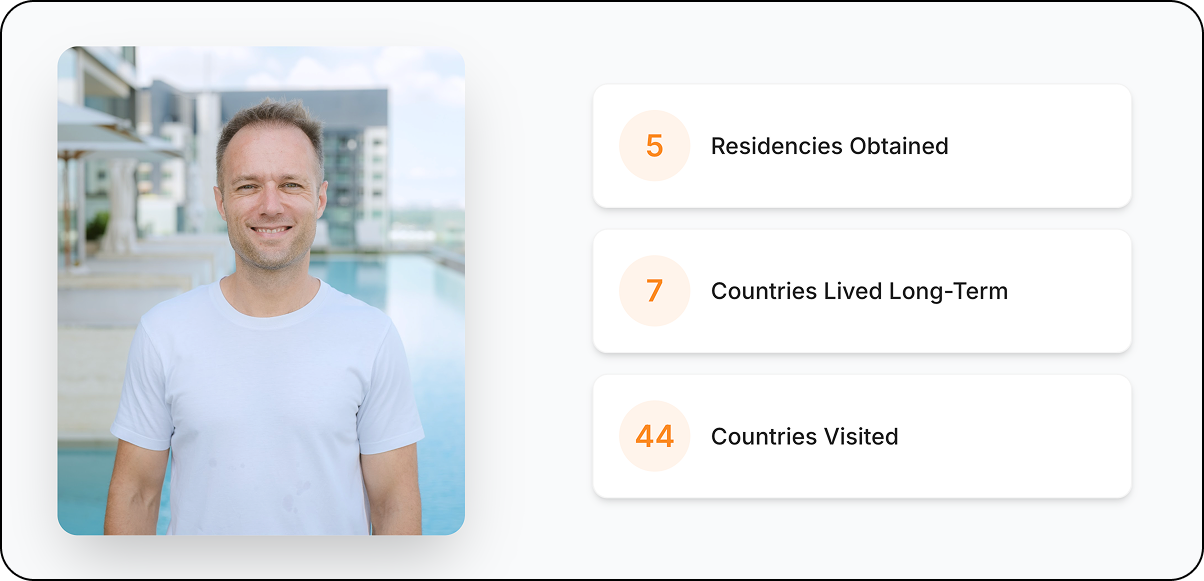
I track policy changes across 40+ destinations monthly so you don’t have to.

I know which programs deliver and which ones have warning signs.
Right now, I’m building the Retire Abroad Blueprint which covers everything Americans 50+ need to get this right.
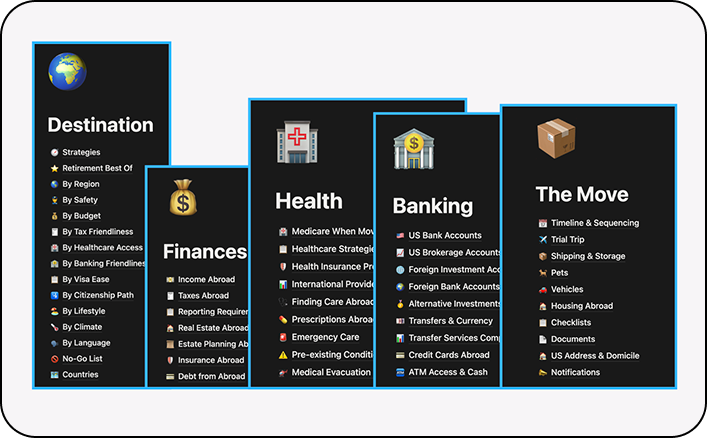
Not a pitch for one country, but a system for building a plan that survives when governments change the rules.
Whether you already picked your destination or you are still figuring it out, this will help to put your move on solid footing.
That’s it for this week.
Thanks for reading, and as always, appreciate having you here.
— Ben
PS
If you are between 50-75 and want to emigrate within the next 0-5 years, and don’t want to navigate healthcare, banking, visas, taxes and country selection by yourself, reply to this mail with “Retire”.
You’ll get a private invite to the “Retire Abroad Priority List” with some of my best tactics for retiring abroad.
While it doesn't negate the overall point of your post, the situation here in Portugal is a bit more complicated. The Socialist party in the government, currently in the minority, exercised their right to request that the new law be reviewed by the Supreme Court for constitutionality. The court found that 4 provisions violated the constitution. Accordingly, the President vetoed the entire law. Now it is back in parliament, where the the ruling parties will attempt to rework it to address these issues and try to pass it again.
At this point no one knows for certain what the final provisions will be, if it will be challenged again, etc. If I had to bet I would say it is almost certain there will be a longer wait time than the current 5 years, somewhere between 7 and 10. As to the issue of when the clock starts ticking, that seems less certain to me . And white unlikely, I don't think it's completely impossible that their coukd be some sort of transitional regime for those who have residency. There have been so many twists and turns already!
Overall, things have changed so much and so quickly in Portugal, some due to immigration, vastly increased second homers and tourism, etc., and some just broader macroeconomic factors. The government has not been effective at addressing the very real needs of the people for affordable housing and higher wages, and as you point out, immigration is a quick and convenient place to put the blame. Sounds very familiar to us Americans these days!
Okay, sorry for the very long comment. I hope it is helpful in some way!
Have visited several of the mentioned countries, lived in Asia, have visited all 50 states, and have been interested in the prospect of a “better place”, but wonder what is one actually getting? Is there a real tangible value (e.g. cheaper prices/better health care/safety) or is it just an escape from the frustration and dissatisfaction with one’s current country?
Either one is wealthy enough for a second house to own/maintain and traveling back and forth or the move is permanent and funds are limited. In the later case, one spends the rest of their life living in a different country with its own frustrations and disappointments. The “exit plan” is limited due to costs. Being the mark in some country’s bailout due to financial mis-management, and then resented, doesn’t sound fun.
As a US Citizen and Veteran I’d move for two reasons that I can think of now: healthcare; and guns. Notice I didn’t say politics. As much as I despise the current situation I like to believe that the social pendulum is at an extreme and will swing back. Or not. However, the genie is out of the bottle on health care and the system is rigged to extract as much as possible before you die. People vote against their own interests when offered reform. Even more serious is that there is no walking back the situation on guns in the US - it’s part of this country’s DNA and people are willing to die and kill for them. Other than to make money, there was no logical reason to proliferate the country with military grade weapons to the general population that is mentally unstable, financially desperate, and increasingly dependent on drugs and alcohol. I’ve known people that have taken their life and those that have murdered and I never saw it coming. Another tragic shooting will occur soon. The cost of this cycle is a huge drag on our society.
So, a country that offers stability, safety, and decent healthcare and a low cost of living would be attractive. Not having to shovel snow would also be nice. Frankly, I’m not sure that this place exists. So, I think I’d opt for one of the Scandinavian countries and pay for the shoveling. Until then my not so cheap Blue State and ability to travel is not bad.