


I’ve talked to dozens of people planning to retire abroad.
The visa questions come first. Then healthcare. But eventually, every conversation lands on the same thing.
Money.
Not “how much do I need”.
More questions like:
How do I actually access my savings from another country?
What happens to my Social Security deposits?
Will my bank freeze my account when they see foreign transactions?
Can I even use an ATM in Portugal without paying fees?
Questions around money kept me up at night before I left Germany in 2020.
I spent years building a system that worked.
Direct deposits flowing into the right accounts. Automatic transfers and investments into different asset groups. Credit cards optimized for rewards.
My fear wasn’t running out of money, but more about blowing up my system.
I wrote about some of the mistakes I made.
Today I want to share what works.
The basic banking setup everyone retiring abroad should aim for.
We’ll cover:
The U.S. home base account you should still keep
The fintech bridge that moves your money across borders without crazy fees
The local account that is needed to access your new country’s payment systems
This is not that complicated.
But I see many people doing it wrong.
So let us have a look at this from a high-level perspective.
Account #1: The US Home Base

Most Americans keep a U.S. bank account after moving abroad.
Not because they “have to”.
Social Security can deposit directly to foreign banks in countries with international direct deposit agreements, which covers most of Western Europe, Canada, the UK, and dozens of other countries. You could skip the U.S. account entirely.
But here’s why you shouldn’t.
A U.S. account gives you a stable anchor for income. Social Security deposits land without international transfer delays, and pension payments arrive on schedule. Your brokerage accounts link directly for withdrawals. Tax refunds arrive within days instead of weeks. And when something goes wrong with a foreign bank, you have a backup that still works.
The problem: Most U.S. banks don’t want you.
Chase, Bank of America, and Wells Fargo have all closed or restricted accounts after detecting foreign addresses or overseas logins. In January 2021, Wells Fargo stopped opening new brokerage accounts for anyone living outside the U.S.
These banks face compliance costs under FATCA (the Foreign Account Tax Compliance Act), and dropping expat customers is cheaper than filing the extra paperwork.
So, you need a bank that actually wants international customers.
What to look for:
Accepts foreign mailing addresses without restrictions
Offers international wire transfers
No monthly maintenance fees (or at least no crazy ones)
Debit card that works internationally
Reimburses ATM fees worldwide (ideally, nice to have)
These banks exist.
If you’re an American 50+ and want to retire abroad in the next 0–5 years, and you’re worried about what happens to your money when you leave the U.S. system reply to this email with “Money”.
I’ll send you my best resources on how to handle banking and money topics when you retire abroad.
Takeaway: Keep a U.S. account as your financial anchor. Pick one that won’t close on you for living overseas.
Account #2: The Fintech Bridge
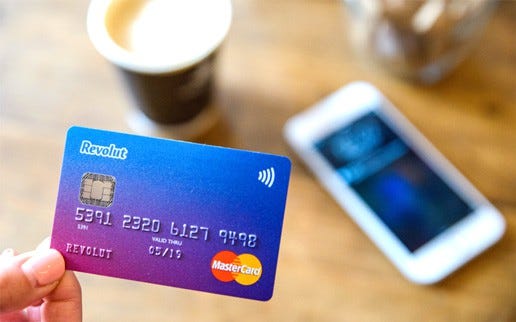
Your U.S. account holds your money. But you live abroad. How do you actually access those dollars without losing 3-5% to bank fees and bad exchange rates every time you need cash?
That’s where fintechs come in.
Traditional banks charge $25-50 per international wire, then bury another 2-4% in the exchange rate markup. Send $5,000 and you might lose $150 before the money even lands.
Do that every month for a year and you throw away thousands.
Fintechs like Wise and Revolut solve this problem. They give you the mid-market exchange rate (the real rate you see on Google) and charge a small transparent fee, typically under 1%. That same $5,000 transfer costs $25-50 instead of $150. The money arrives in 1-2 business days, sometimes seconds.
What fintechs actually do
Think of them as a “currency bridge”. You send dollars from your U.S. account to your Wise or Revolut account. The fintech converts to euros, pounds, baht, or whatever currency you need. Then you either hold it in the app, spend it with their debit card, or push it to a local bank account.
The key features to look for:
Mid-market exchange rates with transparent fees
Multi-currency accounts (hold USD, EUR, GBP, THB, etc.)
Free or low-cost transfers to local bank accounts
Debit card for direct spending abroad
No monthly fees
Wise has been around since 2011 and processes over $10 billion in cross-border transfers monthly. Revolut launched in 2015 and now has more than 50 million customers worldwide.
Both are regulated, insured up to certain limits, and widely used by expats. I’ve used Wise for five years across six countries without issues (on personal accounts, company accounts are another story).
One warning though
Fintechs are not full banks. They work brilliantly for transferring and converting money, but I wouldn’t keep my entire life savings in one. Use them as a bridge, not a vault. Keep your main reserves in your U.S. account, a proper local bank, or even better in secure places in secure jurisdictions (such as Switzerland or Singapore).

Takeaway: A fintech sits between your U.S. account and where you spend money abroad, converting currency at fair rates and moving money quickly. Wise and Revolut are the two most popular options for expats.
Account #3: The Local Account
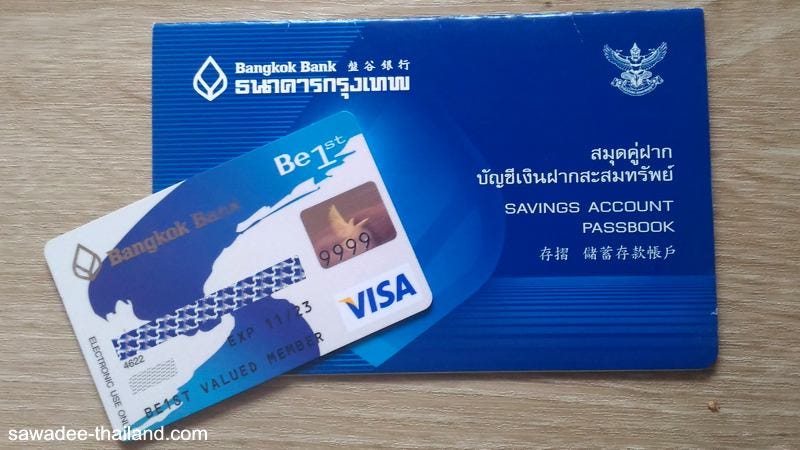
You have dollars in your U.S. account. You’ve moved them through Wise or Revolut.
Now what?
At some point, you need money in the local system.
Cash from ATMs.
Payments at the grocery store.
Rent transfers to your landlord.
And increasingly, access to the local digital payment ecosystem that most countries now run on.
This is the “last mile problem”.
Your fintech can get money close to where you need it. But for daily life, you often need an actual local bank account.
Why local accounts are better than credit cards or fintech accounts
Many countries have built payment systems that only work with local banks. Thailand runs on PromptPay, a QR code system linked to local bank accounts. Walk into any restaurant or street food stall, and you’ll see the QR code on the counter. No Thai bank account means no access.
Portugal has MB Way, a mobile payment app connected to Portuguese banks. Mexico uses SPEI for instant bank transfers. Spain runs on Bizum. The Philippines has GCash.
Each country has its own version of “how people actually pay for things here.”
If you don’t have a local account, you’re stuck using cash or your foreign debit card. Both work, but neither is ideal. Cash means ATM fees and carrying money around. Foreign cards mean foreign transaction fees and occasional declines when merchants don’t accept international cards.
How to get a local account?
Requirements vary by country, but most local banks want to see:
Valid passport
Visa or residence documentation
Proof of local address (lease, utility bill)
Work Permit (or equivalent)
Local tax ID (in some countries)
Some countries make this easy. Portugal requires a NIF (tax number) but issues them quickly. Mexico is relatively straightforward for foreign residents.
Others make it harder. Thailand is very tricky, you need an Elite Visa or Work Permit in 99% of cases. Germany requires an “Anmeldung” (official address registration) before banks will talk to you. France is notoriously difficult for non-residents.
The trick is researching your destination before you arrive. Some expats open accounts within days. Others wait months. Others never get one. Knowing the requirements in advance saves frustration.
My experience
I resisted opening local accounts at first. Wise worked fine for most purchases. I could withdraw cash from ATMs with my Wise card.
Why bother with another bank?
Then I moved to Thailand. PromptPay is everywhere. Splitting dinner with friends, paying for a massage, buying fruit at the market. Everyone just scans a QR code. Without a Thai account, I was the person fumbling for cash while everyone else tapped their phones.
So I got one, and then another one, and it works very well for me.
Takeaway: A local bank account makes local life easier. It’s the final piece that makes your money fully accessible where you live.
Stuck on your moving abroad process? You can book an hour with me here.
How The 3 Work Together
The system is simple.
Social Security, pension, or investment withdrawals land in your U.S. account. Once a month (or whenever you need funds), you transfer dollars from your U.S. account to Wise or Revolut. The fintech converts to local currency at the real exchange rate.
Then you either spend directly with the fintech’s debit card or push the converted funds to your local bank account for rent, utilities, and other local payments.

Three accounts, one direction, and you keep more of your money.
Why this works
Redundancy. If your local bank freezes your account (it happens), you still have access to funds through Wise. If Wise has a technical issue, your U.S. account is untouched. No single point of failure.
Cost savings. You’re converting currency once, at mid-market rates, instead of paying ATM fees and bad exchange rates every time you need cash. Over a year, this saves hundreds or thousands of dollars depending on how much you move.
Access. You can pay your landlord in local currency, tap your phone at the grocery store, and still log into your U.S. brokerage whenever you want. Everything stays connected.
What I actually do
Once a month, I transfer money from my home account to Wise. Wise converts to Thai baht at the mid-market rate. I push the baht to my Bangkok Bank account, where it arrives in seconds. From there, I pay rent via bank transfer and use PromptPay for everything else.
The whole process takes five minutes.
My system is a little more sophisticated by now, but use this to get started.
Takeaway: Three accounts working together give you cheap transfers, full access, and no single point of failure.
Conclusion
That’s it.
Three accounts. One simple system.
Here’s what to remember:
A U.S. account stays for income, taxes, and a financial home base. Pick one that won’t close on you for living abroad.
A fintech like Wise or Revolut sits in the middle, converting currency at fair rates and moving money quickly.
A local account helps you into how your new country actually works, from QR payments to rent transfers.
This is the simplest version of the system.
It works. You can stop here and be fine.
But there’s more you can do.
Separate accounts for investments. Physical asset storage in different jurisdictions. Accounts differentiated by asset class. Automation that moves money without you lifting a finger. I will cover all of this in detail for paid subscribers.
If this resonated, make sure to also check out those:
Thanks for reading and being part of this journey,
— Ben
PS
If you’re an American 50–75 with a meaningful retirement nest egg and you’re seriously thinking about retiring abroad in the next 0–5 years, hit reply and write “Retire”. You’ll get my best tactics for retiring abroad.
What about investment accounts? This is/has been a huge hurdle due to:
US PFIC taxes on the one hand (applying to US citizens who want to own non-US based investments); and
US investment firms (e.g. Vanguard, Fidelity, etc.) not wanting to deal with residents of the EU (including US citizens) due to EU investment disclosure requirements that the US mutual funds and ETFs don't comply with.
Quite a difficult issue, especially for retirees who need to stay invested in order for their funds to last the decades needed!
I was pleased to have retained a credit union account after WF closed our financial accounts for to the foreign address. Our CU provides international services and also hosts traditional IRAs. Any comment on credit unions as opposed to traditional commercial banks?