


“Offshore banking” started as a geography term.
In the late 1800s, bankers on the Channel Islands (a few small rocks sitting between England and France) figured out they could attract deposits by offering lower taxes and more privacy.
The islands were literally “off the shore”, and the term offshore banking was born.
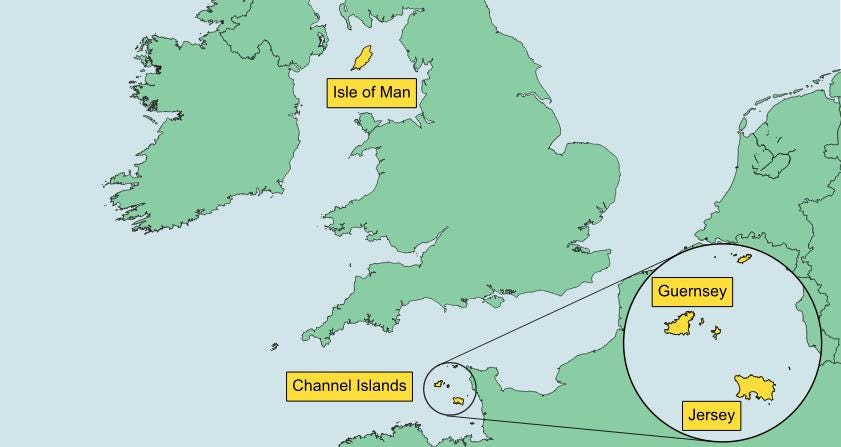
Other jurisdictions copied the model, lawyers and shell companies showed up, and by 2016, 11.5 million leaked documents from a Panamanian law firm turned “offshore” into a word most people associate with crime.
In most people’s heads “offshore banking” signals “something shady”.
But what is an offshore bank account in “today’s” terms?
“An offshore bank account is one that you have in a country you don’t reside in.”
Tax evaders and money launderers ruined this word, and the concept in general.
And now regular people, the ones who actually need a foreign bank account to live their lives abroad, are scared of it.
Meanwhile, the wealthy still use offshore structures without breaking a sweat.
They have lawyers and shell companies to make it easy, while you get your Fidelity account closed for updating your address.
I’ll cover three things in this article:
Where the term “offshore banking” comes from and why the word carries more baggage than it deserves
How the system treats billionaires and everyday people very differently
How you can access offshore banking yourself while staying 100% compliant
Let’s start.
How “Offshore” Became a Dirty Word
For about 150 years, nobody cared.
Wealthy Europeans kept money in Swiss banks, and Americans with business abroad opened accounts in the Caribbean.
Routine financial planning for people who operated across borders.
Then came April 3, 2016.
The International Consortium of Investigative Journalists published the Panama Papers. 11.5 million internal documents leaked from Mossack Fonseca, a law firm in Panama City.
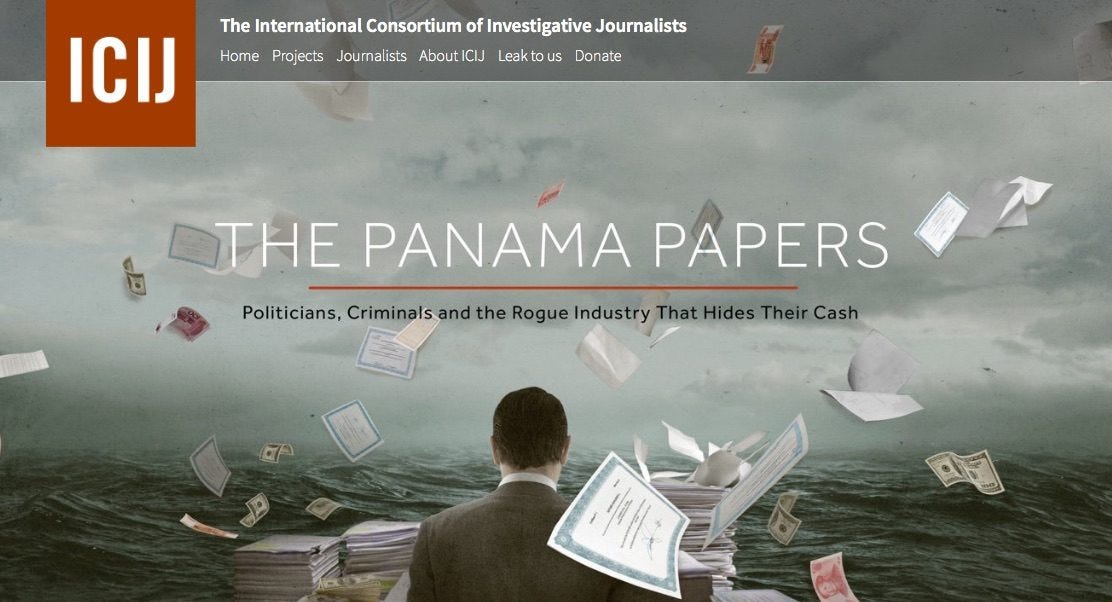
The documents revealed how 214,000 shell companies helped the world’s most powerful people hide money from tax authorities. More than 140 (!) politicians and public officials were implicated, and Iceland’s prime minister resigned within days.
The message the public absorbed was simple:
“Offshore accounts are for criminals.”
However, The Panama Papers told a specific story about one law firm helping specific clients build shell companies to disguise who owned the money inside them.
The crime was the hiding, not the banking.
To make it clear:
A shell company with no real business that exists only to obscure ownership is fraud.
A bank account in Belize where a retired American parks $100,000 in savings and reports it to the IRS every April is just a bank account.
Nobody made that distinction in 2016, and nobody has made it since.
The fraud, the shell companies, the tax evasion, the money laundering: all of it collapsed into one word. Offshore.
Takeaway: Offshore banking is a financial tool. The Panama Papers exposed people who abused it. The tool itself is as boring as a savings account (because most of the time, that’s exactly what it is).
Two Sets Of Rules
If you have enough money, offshore banking is easy.
In 2022, the U.S. Senate Finance Committee investigated how a billionaire named Robert Brockman hid money overseas.
What they found was almost funny.
Brockman created a shell company.
Then he registered that shell company with the IRS as a “financial institution.”
He turned his own company into its own bank.
And then that “bank” self-certified to the IRS that it was reporting everything properly.
The IRS approved it and asked no questions about who owned what or where the money came from.
Senator Ron Wyden called it “a glaring loophole.” His investigation found that in just eight countries where Brockman operated, thousands of offshore entities were registered the exact same way.
I describe this as the “wealthy playbook”:
Create a structure.
Have a lawyer register it.
Self-certify your own compliance.
Nobody checks on the legitimacy of the setup.
But the rules are not the same for everyone.
Here’s what happens to regular Americans who move abroad.
1 - US banks closing expat accounts
In 2025, US banks closed an estimated 340,000 accounts belonging to Americans living overseas. Wells Fargo stopped accepting expat brokerage clients in 2021. Merrill Lynch, Morgan Stanley, Vanguard, Fidelity, and USAA have all restricted or shut down expat accounts since 2024.
Why? Because of a law called FATCA (Foreign Account Tax Compliance Act), passed in 2010. FATCA made it expensive for banks to keep accounts open for anyone with a foreign address. The compliance costs weren’t worth it, so banks started cutting people loose.
2 - Foreign banks might reject you too
FATCA doesn’t just affect US banks. It requires every foreign bank in the world to report American account holders to the IRS. The paperwork is heavy enough that many foreign banks simply refuse US citizens. European brokers almost universally say no.
US banks don’t want you because you moved. Foreign banks don’t want you because you’re American.
3 - Penalties for paperwork mistakes
If your foreign accounts hold more than $10,000 at any point during the year, you must file something called an FBAR (Foreign Bank Account Report) with the US Treasury. Miss it, and penalties start at $16,536 per violation. If the IRS decides you were “reckless” (not even intentional, just careless), penalties jump to $165,353 or 50% of your account balance, whichever is higher.
A January 2026 court ruling confirmed that “reckless disregard” is enough to trigger the maximum penalty.
4 - The IRS isn’t watching the people it should be
Audits of millionaires dropped over the last decade. In 2022, a millionaire’s chance of being audited was 1.1%. People earning under $25,000 were audited at five times that rate.
The IRS brings back $6.29 for every dollar spent auditing the top 0.1%. But enforcement staff has been cut by a third in 2025, and the current administration is preparing further cuts.
The government spends less on auditing the people who owe the most, and more on auditing the people who can least afford to fight back.
Takeaway: The system makes offshore banking easy if you can afford lawyers and accountants. For everyone else, it’s a maze of closed accounts, rejected applications, and penalties for paperwork you didn’t know existed. FATCA was built to catch tax cheats. In practice, it mostly punishes regular Americans who move abroad.
What Offshore Banking Actually Looks Like For A Regular Person
Forget the movies.
Offshore banking for an American moving to Spain starts boring:
A bank account in Madrid to pay rent and a way to get dollars from the US to Europe without losing money on fees.
Wise handles that transfer. Real exchange rate (the same one on Google, not the marked-up version), no monthly fees, and most transfers arrive within 24 hours.
Social Security, pension, IRA withdrawals land in a US bank account, Wise moves it to Madrid.
That covers daily life.
But most of your money is still in the US.
And that’s a risk.
Every dollar you saved, every investment you own, every account you hold is inside a system that is actively closing accounts for people who move abroad.
One policy change, one compliance review, one letter in the mail saying your account will be closed, and you’re scrambling from overseas to figure out where your money goes.
There are three ways to deal with this, depending on how much complexity you’re comfortable with.
Option 1: Keep it simple.
Stay inside the US system with brokerages and banks that still accept expats. Charles Schwab and Interactive Brokers are the names that come up most in expat circles.
The downside: some providers may still restrict your account depending on which country you move to, and the (risky) bet on their expat-friendly policies not changing.
Option 2: Go offshore yourself.
Open accounts in jurisdictions that actively welcome American clients. The idea is geographic diversification so that your money does not sit in one country’s system.
The downside: more research, more paperwork, and investment options for Americans are more limited (thanks to PFIC and MiFID II, two regulations that trip up almost every US expat who tries to invest abroad).
Some offshore accounts have a reputation for paying less interest than US banks. But a properly structured account in the right jurisdiction can match what high-yield US savings pay.
Option 3: Get professional help.
There are specialists who structure international finances for Americans abroad. They handle compliance, account setup, custody, and management across borders.
The upside: access to options and institutions you won’t find on your own, and someone else handling the complexity.
The downside: good firms are selective with clients they take on, and this option typically makes sense for people with $500K or more in movable assets.
Reporting needs to be done regardless of what option you chose.
Once a year, two forms:
FBAR: required if foreign accounts hold more than $10,000 total at any point during the year. Online form with the US Treasury. Account names, max balances, locations. Due April 15, automatic extension to October 15.
Form 8938: required if foreign assets exceed $200,000 (living abroad) or $50,000 (in the US). Filed with the tax return.
Takeaway: If all your money stays in one system, you’re exposed. Which option to structure your money is the right one depends on your situation, your assets, and how much complexity you want to take on.
Conclusion
That’s it.
Three things worth remembering:
“Offshore banking” means having a bank account in a country where you don’t live. The Panama Papers made the word toxic, while the tool itself is ordinary.
The system makes it easy for billionaires (self-certify your own shell bank, nobody checks) and hard for regular people.
Three options exist for structuring your money internationally. Which one fits depends on your assets, your destination, and how much complexity you want to take on.
Thanks for reading, and as always, appreciate having you here.
— Ben
PS
I mentioned PFIC and MiFID II in this article without explaining them (two regulations that affect how Americans can invest abroad). I wrote a guide that breaks down both, how they affect your investments, and what your options are depending on where you move.
Reply “MONEY” and I’ll send it to you.
"Money"
Very useful, if a bit worrisome rundown.
Money