


Since I published this article last year, one question keeps coming up:
Which residencies are “easier” to obtain than others?
Some programs have short timelines but bury you in paperwork, consulate appointments, and notarized translations.
Others ask for almost nothing, but processing drags on for a year.
The five in this article get both right: low requirements and reasonable timelines.
Here’s what you’ll find for each:
Country, timeline, and requirements
What you get (and what to watch out for)
How to apply and what the process looks like
Let’s get started.
#1 Panama (Pensionado Visa)
![Panama: Tipps für eine abwechslungsreiche Reise - [GEO]](https://substackcdn.com/image/fetch/$s_!B2YE!,f_auto,q_auto:good,fl_progressive:steep/https%3A%2F%2Fsubstack-post-media.s3.amazonaws.com%2Fpublic%2Fimages%2F150f4d88-1705-4cce-a7f8-3f08c0d8b0e5_1440x954.jpeg "Panama: Tipps für eine abwechslungsreiche Reise - [GEO]")
Panama’s Pensionado launched in the 1980s. It has run for almost 40 years without changing its core structure.
Social Security qualifies, so do military pensions, SSDI, and federal or state government pensions. If you buy property worth $100,000 or more in Panama, the threshold drops to $750 per month.
Timeline:
3-6 months
Requirements:
Proof of pension income of at least $1,000/month (or $750/month with $100K+ property purchase)
$250/month additional per dependent
Valid passport
Health certificate from a Panamanian physician
Police record from your country of residence (past 5 years)
Benefits:
25% off airline tickets
25% off restaurants
50% off entertainment
20% off private medical consultations
15% off hospital bills
10% off prescription medications
25% off electricity
No tax on foreign-sourced income
Dependents (spouse, children under 25) included
How to apply:
Through a Panamanian immigration lawyer
Or directly at the Servicio Nacional de Migración
One thing to know:
You need to visit Panama at least once every two years. Absences beyond 24 months can result in cancellation of your visa and a fine.
Takeaway:
$1,000/month in pension income gets you permanent residency in a program that has run (more or less) unchanged since 1987.
#2 Paraguay (Temporary Residency)
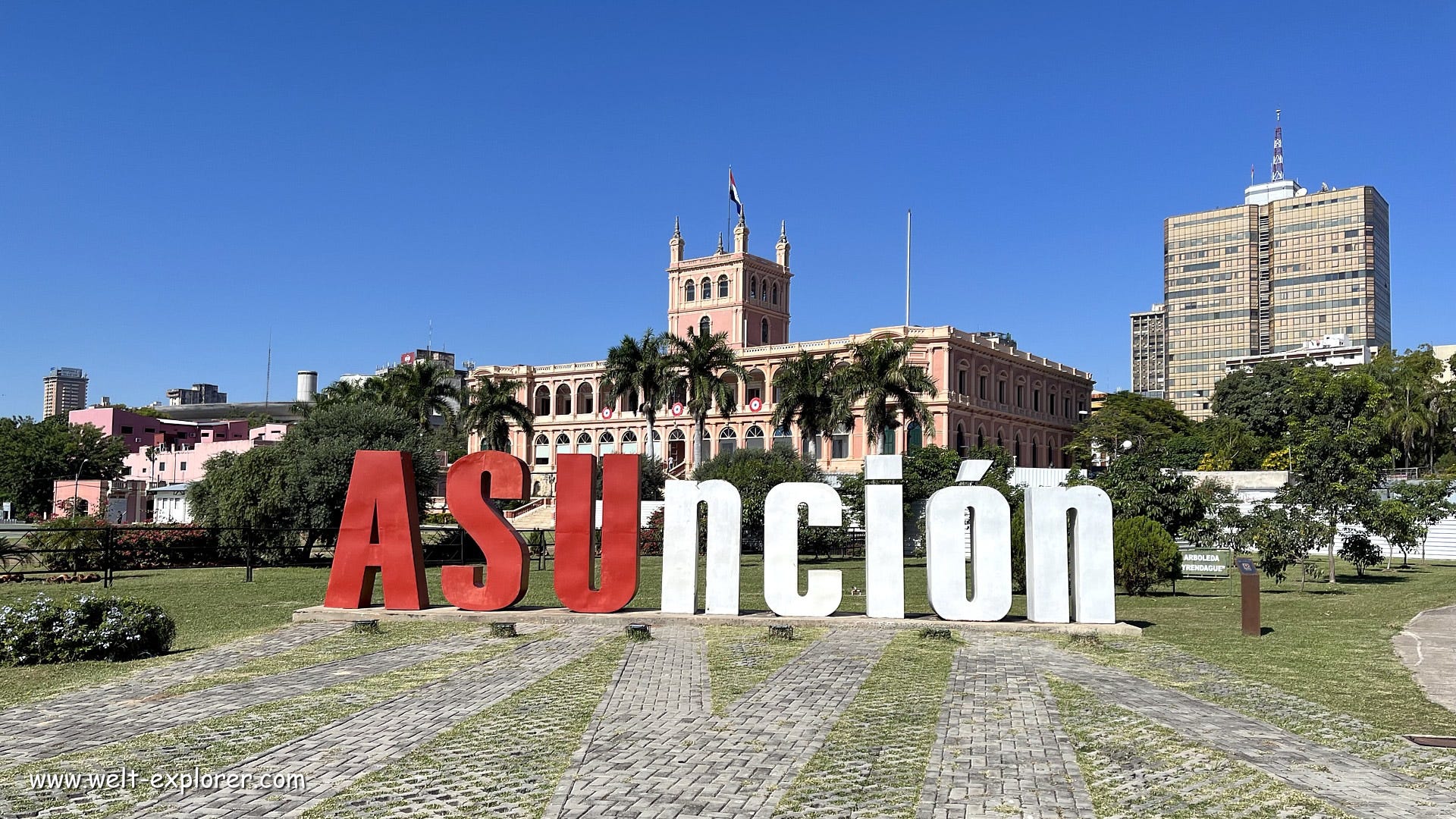
Paraguay removed its $5,000 bank deposit requirement in 2022. A declaration of your profession or financial means is required, but you don’t need to prove funds.
Timeline:
2-4 months for approval (in-person steps take 2-5 days in Asunción)
Requirements:
Valid passport
Apostilled criminal background check (past 3 years)
Apostilled birth certificate
Apostilled marital status certificate
Passport-sized photographs
Government fee: ~$350 USD
Total cost with lawyer, translations, and apostilles: $1,500-$3,000.
Benefits:
2-year temporary residency, renewable
Permanent residency after 24 months
Territorial tax (no tax on foreign-sourced income)
No minimum stay requirement
Citizenship eligible after 3 years of permanent residency
How to apply:
In person at the Dirección General de Migraciones in Asunción
Or through a local immigration lawyer
One thing to know:
You need to go to Asunción in person. The process can't be done remotely or at a consulate abroad.
Takeaway:
No income requirement, no investment, under $1,000 in fees. Cheapest entry point on this list.
PS: Paraguay just launched a new permanent residency investor visa. For $150,000, you can skip the temporary phase entirely. Upgrade below to read the full breakdown (and see which of the three offered paths is actually worth your money).
#3 Uruguay (Rentista Visa)
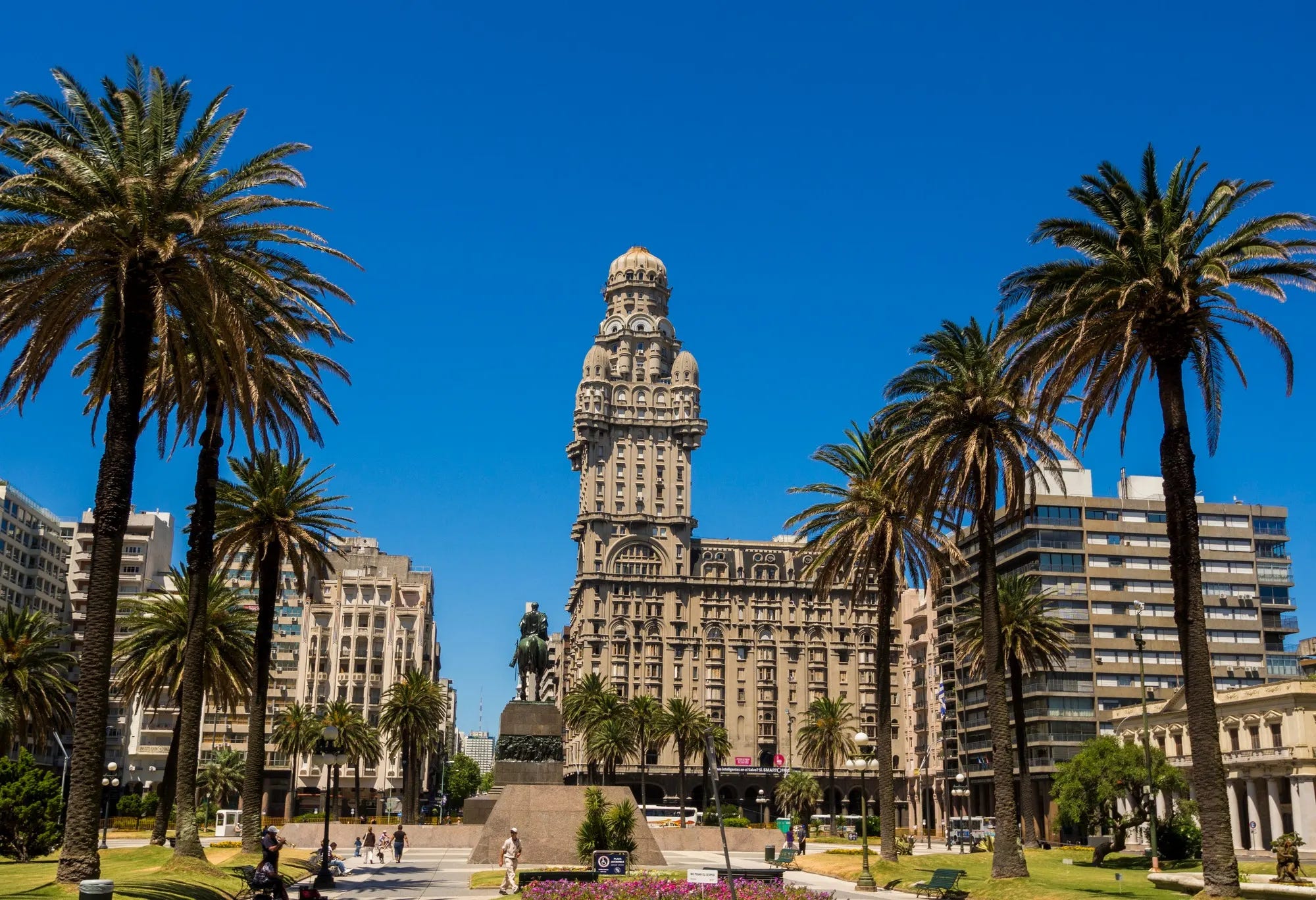
Uruguay lets you apply for permanent residency directly. Once you filed, you get a temporary cedula (ID card) within about 10 days, and wait 6-8 months for the permanent approval to come through.
Timeline:
Temporary cedula within ~10 days
Permanent residency approval in 6-8 months
Requirements:
No legally fixed minimum income; assessed case by case, but $1,500 is the standard benchmark.
Valid passport
Birth certificate (apostilled)
Police clearance from your home country and any country you’ve lived in the past 5 years
Medical certificate (done in Uruguay)
Proof of local address (rental contract or property)
Benefits:
Permanent residency granted directly (no temporary residency phase)
Tax Holiday: 11 years of exemption on foreign-source capital income (year of acquisition + 10 calendar years), but only if you spend 183 days/year in Uruguay or invest ~$2 million in local real estate
Citizenship eligible after 3-5 years (depending on status)
How to apply:
Enter as a tourist and apply in person at the Dirección Nacional de Migración in Montevideo
Or work with a local immigration lawyer
One thing to know:
You cannot be absent from Uruguay for more than 3 consecutive years, and spending at least 30 days per year in-country is recommended to maintain your status. If you want the tax holiday: 183 days per year.
Takeaway:
Permanent residency on your first application for ~$1,500/month in passive income. The tax holiday is a bonus, but only if you actually live there most of the year.
#4 Portugal (D7 Visa)

Portugal’s D7 requires €920 per month in passive income (roughly $1,085). For a couple, €1,380. Pensions, dividends, rental income, and investment returns all count.
Timeline:
Consulate processing: 30-60 days (however, getting a consulate appointment in the first place will take longer)
AIMA residence permit appointment in Portugal: months-long backlog (400,000+ pending applications as of 2026)
Requirements:
Proof of passive income of at least €920/month (single) or €1,380/month (couple), plus 30% per child
Valid passport (6+ months validity)
Criminal background check
Proof of accommodation in Portugal (12-month rental or property)
Private health insurance
Must spend at least 183 days per year in Portugal
Benefits:
2-year temporary residency, renewable
Permanent residency after 5 years
Schengen area access (travel across 29 European countries)
Path to citizenship after 10 years (up from 5, pending presidential signature as of April 2026)
Dual citizenship allowed
Right to work included (rare for passive income / retirement visas)
How to apply:
Schedule an appointment at the Portuguese consulate in your country of residence
Submit documents and attend in person
One thing to know:
You need a Portuguese NIF (tax number) before you can do almost anything (sign a lease, open a bank account, buy a phone plan etc). Get one remotely through a fiscal representative before you arrive, or in person at a local tax office.
Takeaway:
One of the easiest ways into the Schengen area on passive income alone. Just budget extra time for Portuguese bureaucracy.
PS: I recorded a 20-minute training, covering the exact system I use, to avoid making expensive mistakes with your move. Watch it here.
#5 Thailand (Elite Visa)

Thailand’s Elite Visa (officially the “Privilege Visa”) is a membership program. Pay a one-time fee, get a 5 to 20-year visa. No income proof, no age requirement, no minimum stay.
Timeline:
1-3 months (background check takes 4-6 weeks)
Requirements:
One-time membership fee starting at 650,000 THB (~$19,000)
Valid passport
Clean criminal record
No overstays or visa issues in Thailand
Benefits:
5 to 20-year visa depending on tier
No minimum stay requirement
VIP airport fast-track and immigration processing
1-year stay per entry (re-enter to reset)
90-day reporting handled for you
No income, investment, or employment proof needed
Option to open local accounts with multiple banks
How to apply:
Apply online at the Thailand Privilege Card website
Or through a licensed agent for easier processing (no extra fee)
One thing to know:
Thailand Privilege has raised membership fees multiple times since the program launched in 2003. The entry-level price today is higher than it was two years ago, and there’s no reason to expect it will stay where it is. If you’re considering this, waiting usually costs more.
Takeaway:
Pay once, stay for years. No other program on this list is this hands-off.
Conclusion
That’s it.
Five residencies across three continents:
Panama’s Pensionado has been running since 1987 on the same terms. $1,000/month in pension income gets you permanent residency.
Paraguay and Uruguay cost the least to enter, but you need to show up in person to apply.
Portugal has one of the lowest income bars in Europe at €920/month, but it can take a little while until you have your residence permit.
Thailand’s Elite Visa is the most expensive and the most hands-off. No paperwork, no renewals, no minimum stay.
Don’t forget: Residency programs change. Prices go up. Tax breaks disappear. Banking gets more restrictive every month you wait.
The best time to get residency is when you don’t need it.
If you have questions about your specific situation, drop them in the comments.
I read them all.
Appreciate you being here,
— Ben
PS
If you’re thinking about retiring abroad in the next 5 years but not sure about where to go, which visa to use, or what happens to your money when you leave, you can book a free call with me here.
I help you figure out which program fits you best, based on a process that I successfully use with all my clients. You won’t wonder about missing out on a great program, what to do with your money or confusing tax questions anymore, and know exactly what works for you (and what doesn’t).
Mexico residency is easy, but income requirements have gone up considerably in recent years. I'm thankful I got mine 6+ years ago. It's great that there are still affordable options.
I’m looking into Canada by descent. How does Canada stack up, especially Nova Scotia?