


I opened my first foreign bank account in 2008, on a working holiday in Australia.
I walked into a branch with my passport, and 20 minutes later it was done.
I figured banking abroad would always be that easy.
(It wasn’t.)
A few years later I did an internship in China and got turned down at every single bank (half the time because my Chinese wasn’t good enough to explain what I wanted, and this was before fancy translation apps).

Since then I’ve opened accounts across Europe, the Middle East, the Americas and Asia and made most of the mistakes I now warn readers about.
Today, my money sits in 7 countries.
But I built all of that on a German passport.
You’ll be building yours on an American one.
FATCA makes you expensive to service, so foreign banks hesitate and US banks push you out.
In 2025, US banks closed an increasing amount of accounts held by Americans living abroad, most of them for nothing more than a foreign address on file.
So today I’m giving you the full setup, start to finish:
The institutions that work for Americans abroad
The 4 money roles, and which account does each job
The exact order to open everything (most of it happens before you leave the US)
We start with the framework.
PS: I’m not affiliated with any of the institutions named in this article. There are no affiliate links or anything compromising my subjective take on what I’m presenting. All of the things presented are frameworks that I created myself over two decades of living abroad. I’m not a financial advisor, and this setup is simply how I would build it, and purely demonstrated for educational purposes.
The 4 money roles
Every dollar you own is doing one of four jobs, whether you manage it that way or not.
I broke this framework down in How To Move Your Money Abroad, so here’s the short version:
GROW is the money working for your future, such as retirement accounts and your brokerage.
PARK is the money you protect, like savings accounts and term deposits that pay little and lose nothing.
MOVE is how money gets from one country and currency into another, whether you travel or stay somewhere long term.
SPEND is the card in your pocket and the checking account behind it. Money you use to pay for everyday expenses.
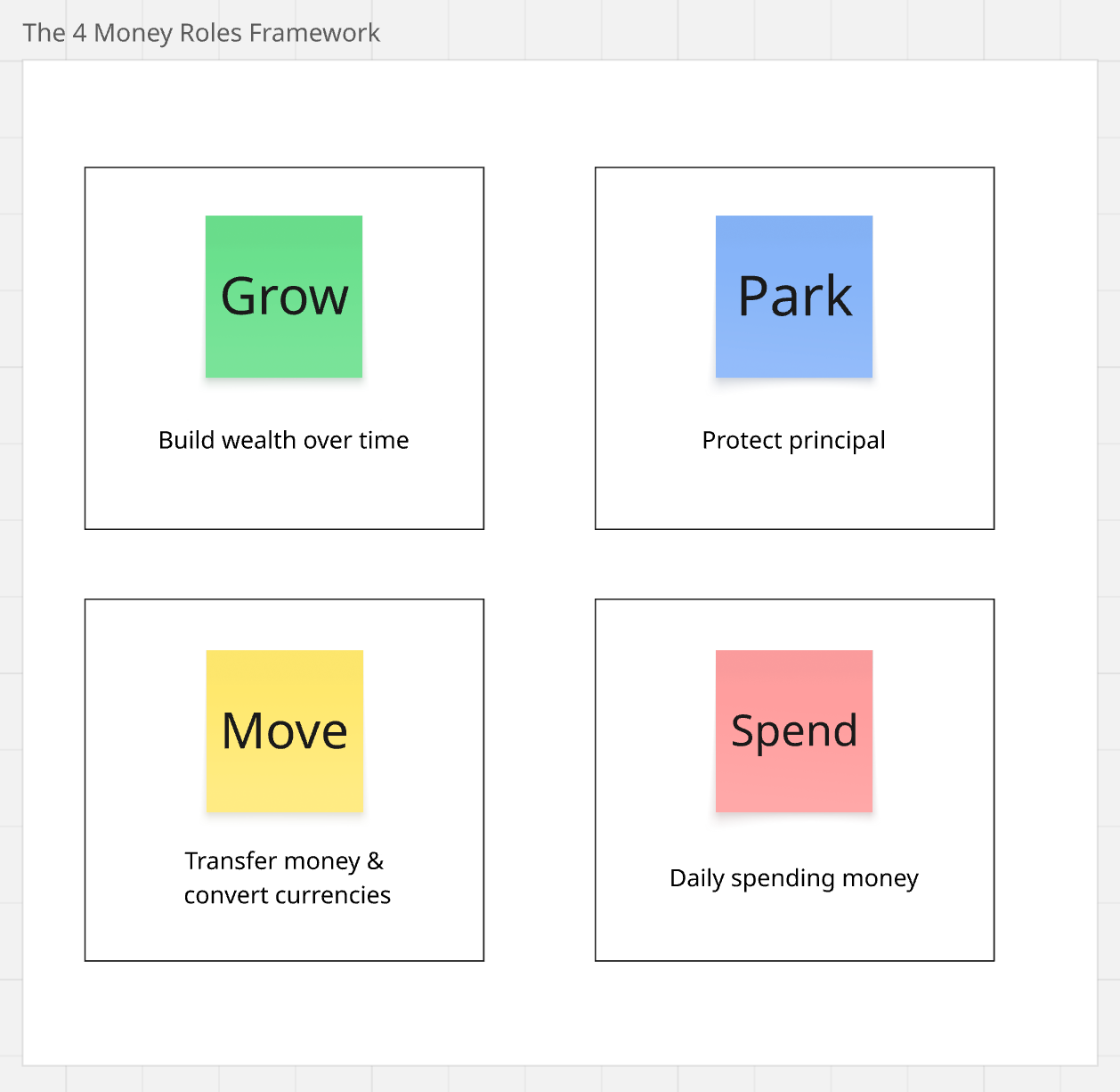
Right now, all four roles are probably in one country.
Your IRA grows, your savings sit at your bank, Zelle moves money between friends, and your debit card spends it.
Moving abroad splits every role in two.
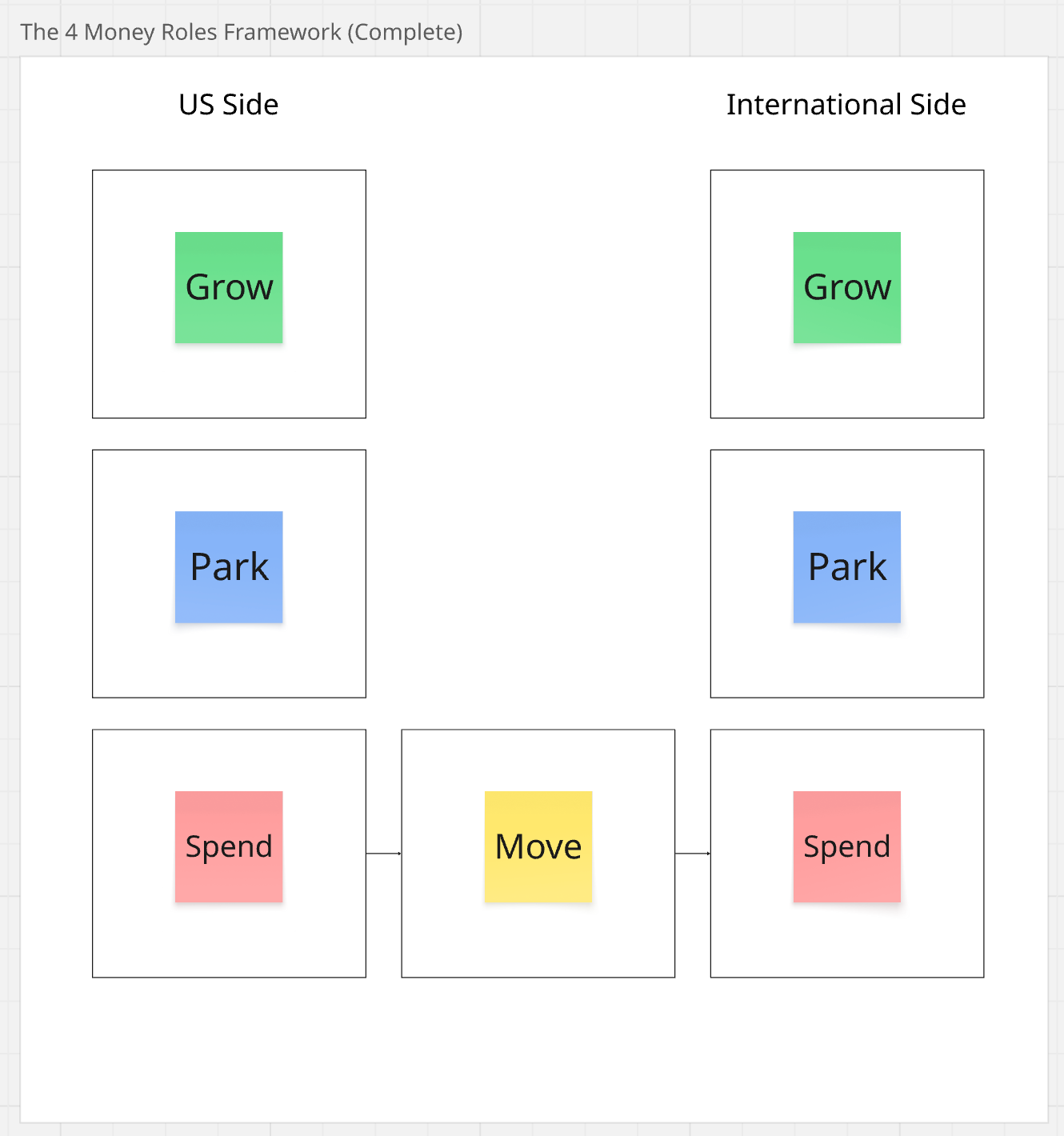
From here on, every role has a US side and an International side, and your setup only works when both are covered.
If that sounds too complicated already, I recorded a short video below explaining the logic.
Takeaway: You already have all four roles today, the work is building the international side.
We build them in reverse order, starting with SPEND.
SPEND: the money you live on
Daily money works with two accounts, one on each side of the border.
The US side comes first, and it starts with a decision about your income.
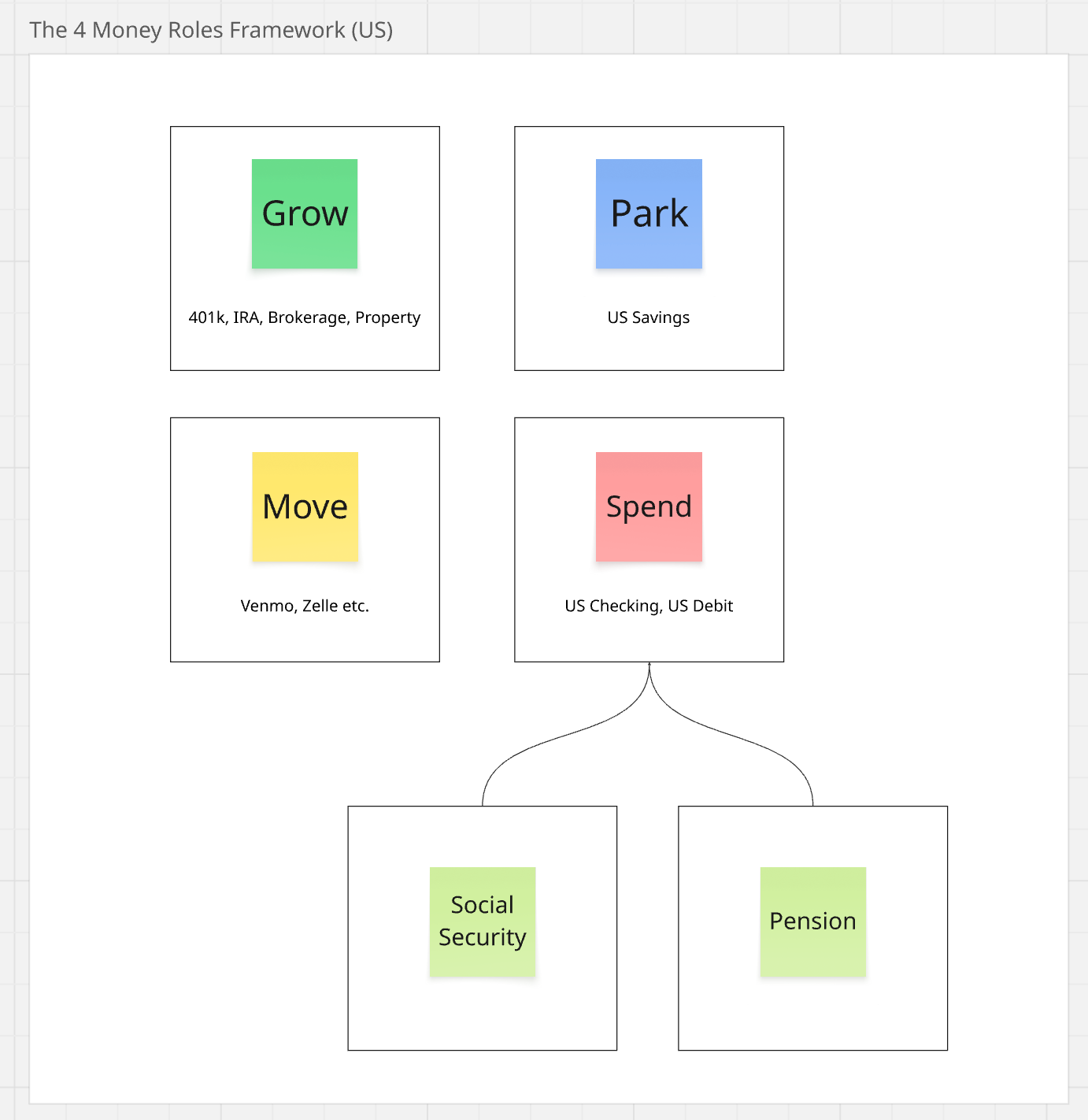
Social Security pays directly into foreign accounts in most retirement destinations.
So no, you don’t need a US account for the check to arrive.
I recommend one anyway.
The reason is control over the amount and the timing.
Paid into a Portuguese account, your full benefit becomes euros at that day’s rate, every month, whether you need it all in euros or not.
SSA’s own sign-up form for Portugal states:
“The account must be in euros, and the payment converts automatically.”
If you deposit it in the US instead, you decide when dollars become euros, and how many of them.
Direct deposit abroad suits people who are fully settled and spend every cent locally, and the conversion rate itself is fair.
The second decision is which US bank.
Most big banks don’t want customers with foreign addresses.
Chase and Bank of America have both closed accounts over one. The standard answer for expats is Charles Schwab.
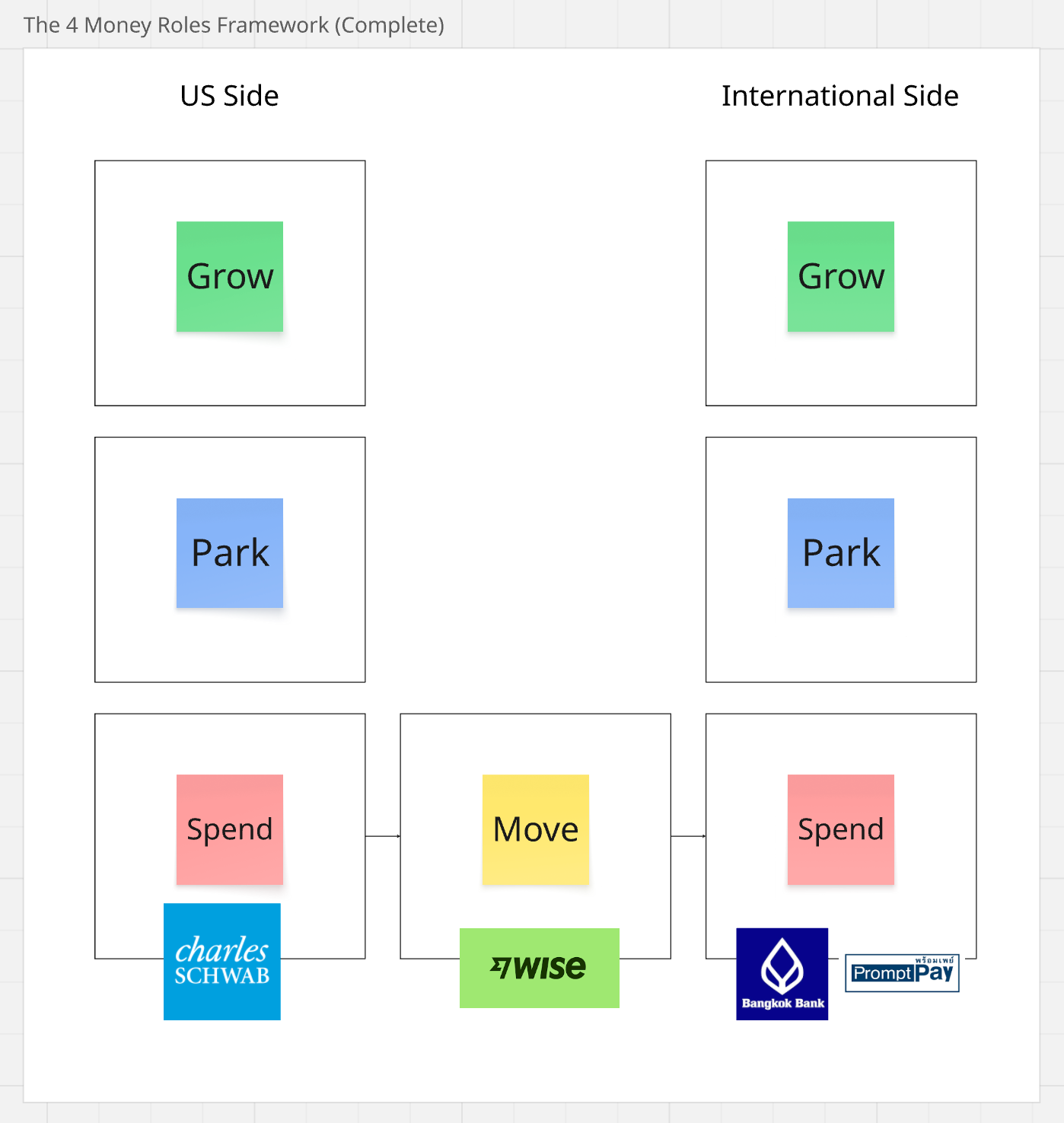
Their checking account accepts foreign addresses, charges no foreign transaction fees, and refunds ATM fees worldwide.
The abroad side is the local account.
Every country has its own payment system that locals use for everyday transfers:
In Mexico it’s SPEI
In Portugal it’s MB Way
In Thailand it’s PromptPay
These systems only work with an account at a local bank.
I keep two accounts here in Thailand for spending money and the local payment systems.
I went deeper on local accounts in The 3 Bank Accounts Everyone Retiring Abroad Needs.
Opening a local account usually takes a passport, your visa or residency permit, and proof of a local address.
Some countries let tourists open accounts, most don’t, and requirements change by branch as much as by bank.
By now, the setup looks like this:
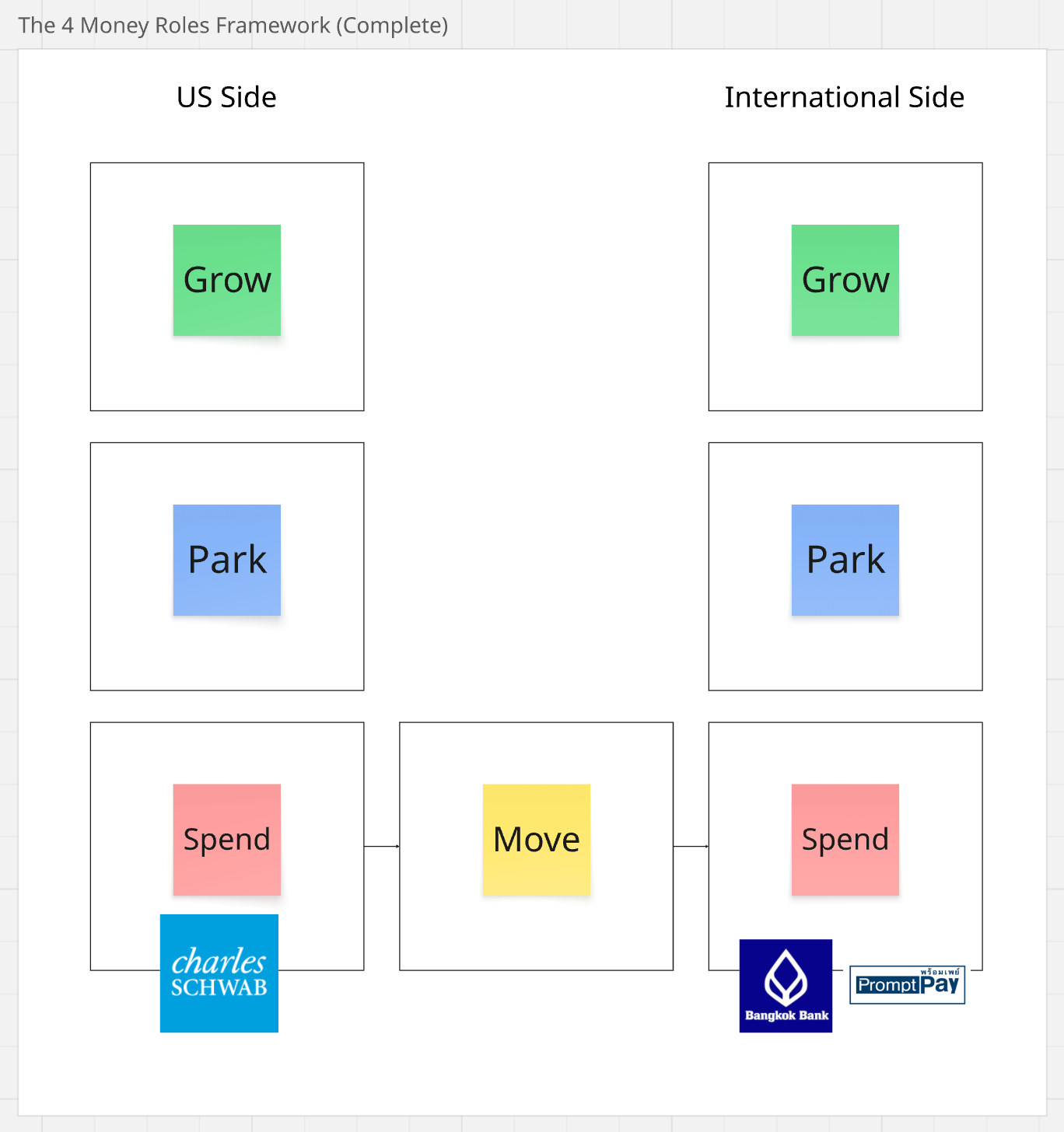
Takeaway: Income lands in a US checking account you control, and a local account holds spending money that you need locally.
How the money gets from Schwab to your local account is the next role: MOVE.
MOVE: getting money across the border
The tools you use to move money today stop working at the border.
Zelle and Venmo are domestic only.
Your bank will happily send an international wire instead, for $25 to $50 per transfer, converted at an exchange rate 2 to 4% worse than the real one.
If you do this every month, you lose money (simple as that).
This is what fintechs (like Wise) are built for.
You connect your US account, convert dollars at the mid-market rate (the one you see when you Google “USD to EUR”), and send the money to your local account for a fee under 1%.
The same transfer often costs way less than sending a direct wire from your US bank.
And you control the timing.
This is the Social Security argument from the SPEND section.
Dollars sit at Schwab as dollars, and they become euros only when you decide.
Wise lets you set a rate alert, so you convert when the rate is good instead of when the calendar says so.
Now the warning.
Wise is not a bank.
There’s no branch, US balances are insured only through partner banks and only if you opt in, and accounts do get frozen over verification issues, and there's no branch to walk into while you wait.
Move money through it, never store wealth in it.
I took this question apart in Can Fintechs Really Replace Banks?
With MOVE in place, the typical month finally works:
Social Security arrives at Schwab.
You send it to Wise (and you decide when).
Then you convert it to euros and send it to your Portuguese account.
Local rent goes out by IBAN transfer, groceries go on the local debit card.
Takeaway: Move money with Wise (or another fintech) at the real exchange rate, and never keep (much) more in there than the transfer you’re making.
Now spending is covered and money moves.
Your setup looks something like this by now:
The next role is where your reserves sit: PARK.
PARK: the money that sits safe
“MOVE and SPEND I get. But what is PARK supposed to be, Ben?”
Fair question.
PARK is the money you’re not spending this year and not investing either.
You already have it, you just call it something else:
“Your emergency fund”
“The cash bucket for bigger purchases”
“Money you keep ready, not invested in the market”
That money probably sits in a high-yield savings account.
And those are the first accounts to close when you move.
Ally’s own account rules require "a U.S. street address."
Marcus and the other online banks paying the best rates work the same way.
So the accounts holding your safety cushion are the most “residency-sensitive” accounts you own.
Your checking account might survive the move.
Your HYSA probably won’t.
PARK gets rebuilt on both sides, and you choose how.
Keeping part of it in the US works fine.
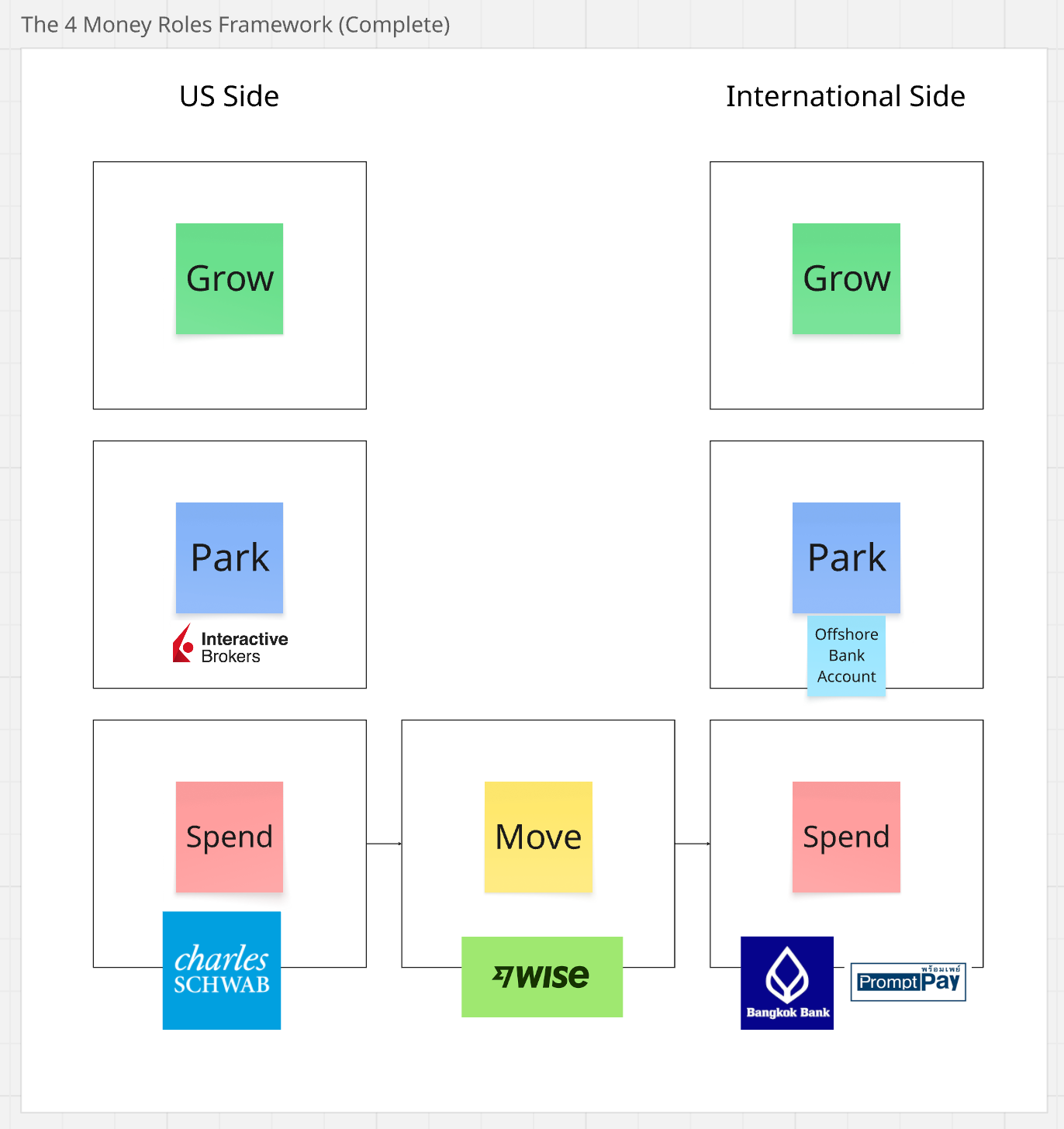
Interactive Brokers accepts foreign addresses and pays interest on cash that just sits in the account.
Just know that the US share is optional.
American obligations (the IRS, the credit cards) might already go through your US checking account.
The international side is where I would now add another form of de-risking assets.
Most movers want to park the cash in their new country.
Don’t.
You already keep one to two months in the local account, and the rest has no business there, for one reason: you might leave.
Maybe the tax rules change, maybe the grandkids pull you back, maybe year three feels different from year one.
If your reserves live in the country you’re leaving, you rebuild the whole setup from zero.
Disconnect PARK from your new country and it stays the same, even when you move again.
The third country means a stable jurisdiction where you don’t live and never have:
Switzerland or Singapore for larger amounts
Panama, Georgia or the Caribbean for simpler remote openings
I wrote a full article on this account: The 4th Bank Account.
How much goes where is personal.
Keep half in the US and half in the third country, or a low amount (or zero) in the US.
Any scenario works.
What matters is that your reserves don’t all sit in one country, and that none of them depend on the country you happen to live in.
Your setup now might look something like this:
Takeaway: Park your reserves in countries you don’t live in, so no single address change can reach your savings.
Now, this leaves the biggest role of all.
Your 401(k), your IRA and your brokerage.
Who grows your money once you’ve left, and in what exact order should you open everything?
The next section: GROW.