


You are sitting across from your financial adviser.
And he recommends a fund.
Maybe a good fund.
But you have a question in the back of your mind:
Does it benefit him as well, if I buy it?
Which is hard to find out.
When the fee comes out of the fund itself, you never see a bill for it.
And he probably won’t mention:
“Oh and by the way, I earn more commission on this fund, compared to five others I didn’t show you.”
Then you decide to move abroad, and you tell your adviser you’re leaving the US.
Now there’s a new question.
Will he still help you, or will his advice change?
In The Bank Account They Can’t Touch, I wrote that the stories clients told me about their US advisers would make your head spin.
Today I’m sharing those stories.
I went back through my calls with Americans who are moving abroad, from March to October 2026.
Two things kept coming up:
People were paying fees they didn’t know about.
Their adviser acted differently once they said they were moving.
Germany has an old name for someone you can trust in business:
“The honorable merchant”
And funny enough, they still exist today.
Here’s what we’ll cover today:
Where the idea of the honorable merchant comes from
What Americans moving abroad told me about their advisers
What to ask before you trust anyone with your money abroad
First, a short history lesson.
The honorable merchant
The “Hanseatic League” started in northern Germany in the late 1100s, around the city of Lübeck.

It grew into a network of trading cities, with Hamburg among the most important.
There was no king behind it and no central government. The cities worked together to protect their merchants and their trade.
The Hanse had four big trading offices abroad, called Kontors: London, Bruges, Bergen and Novgorod.
So its merchants traded across the North Sea and the Baltic, from London to Novgorod.
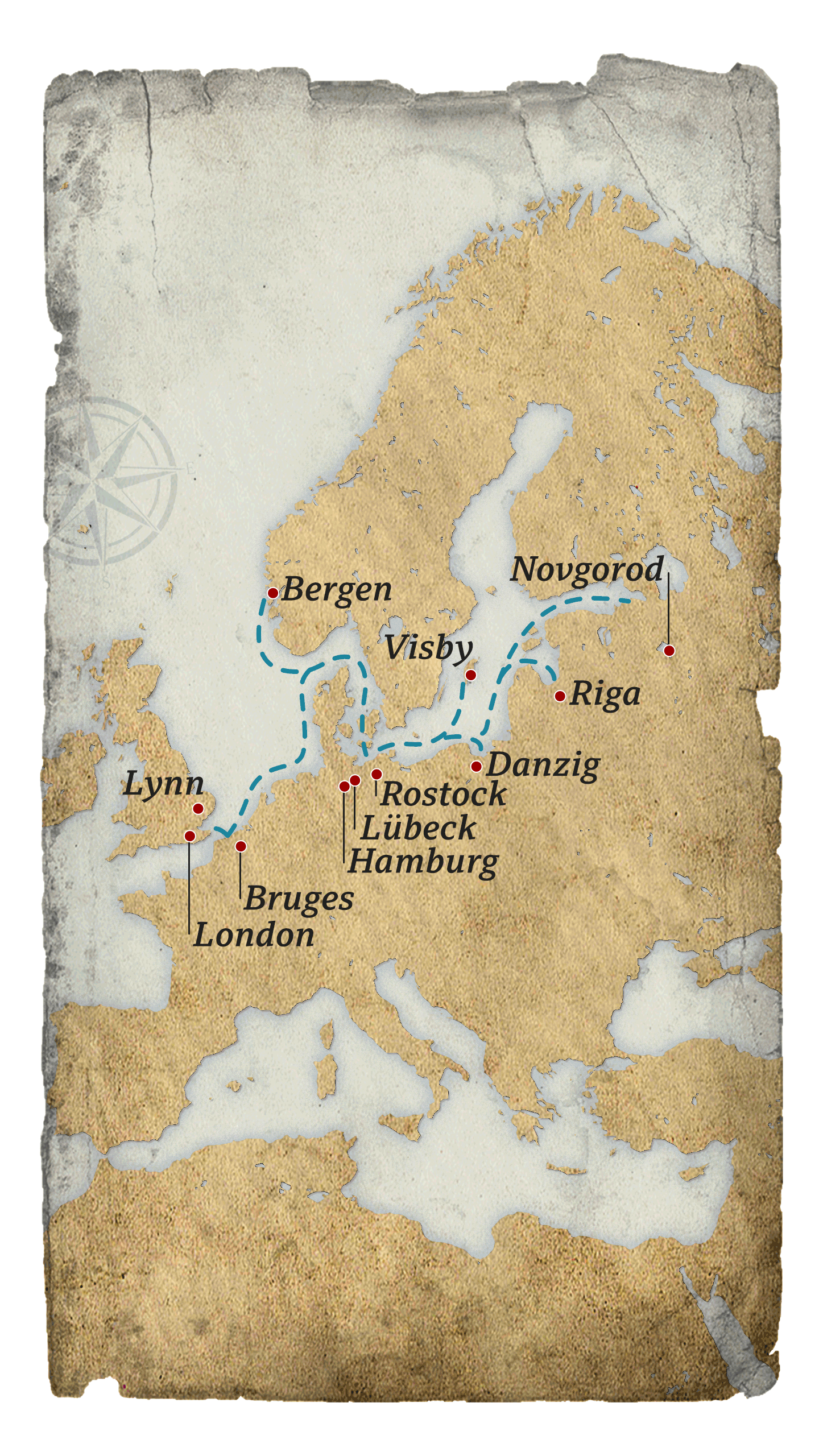
In London, their compound was called “the Steelyard”.
Hanse merchants there were exempt from many English taxes and tolls, and English courts had no say inside it.
That lasted until Queen Elizabeth I closed the Steelyard in 1598.
Without a king, the whole system depended on trust.
A merchant’s word had to be good. If he broke the Hanse’s rules, he could lose the right to trade under its privileges.
In the 1600s, Hamburg’s merchants gave this idea a name:
The “Ehrbarer Kaufmann” meaning the “honorable merchant”.

Today the German chambers of commerce describe him as someone who is honest and reliable, takes responsibility for what he does, and thinks long-term.
And yes, they still exist.
Hamburg’s merchant association, the “Versammlung Ehrbarer Kaufleute”, still meets today (with roots going back to 1517).
German law even mentions it.
Since 1956, the law on German chambers of commerce has told the chambers to protect “the decency and customs of the honorable merchant.”
The English have their own version.
The motto of the London Stock Exchange is “Dictum Meum Pactum”, which means:
“My word is my bond.”
And there’s another reason I like the Hanse.
A Hanse merchant was a citizen of one city, like Lübeck or Hamburg.
But he did his business in London or Bergen, wherever the Hanse had the best rights.
Today we call that “flag theory.”
Hanse merchants did it centuries before anyone gave it a name.
In plain words, flag theory means planting “flags” in different countries.
That can be your residencies, as described in the bottom half of this article.
Or bank accounts in countries where you don’t live, as described in this article.
But what I like most about the Hanse is the honorable merchant.

He keeps his word.
He tells you what he earns.
And he treats you the same the day you leave as the day you walked in.
That’s the standard anyone who handles your money should meet.
Keep it in mind for the stories below.
Takeaway: The honorable merchant is a centuries-old standard, and German law still tells the chambers of commerce to protect it.
What I hear on my calls
Not every story was bad.
Some people on my calls have an adviser they trust, and they’re happy with them.
The same way not all local advice is bad, not all non-local advice is good.
This is not the argument I’m trying to make.
I want to tell stories that I heard myself.
And they fall into five patterns that I observed.
Paid subscriptions are 40% off until Friday, November 20.
I offer this kind of discount maybe once per year.
If you’ve been thinking about upgrading, this is the moment.
1. You pay more than you think
Most advisers charge you a fee every year, as a percentage of your money.
One retired couple asked several advisers what they charge.
The answer was 1.5% to 1.7% a year.
If you have $1 million, that’s $15,000 to $17,000. Every year.
And you usually don’t get a bill.
The fee is taken straight out of your account, so it’s easy to miss.
One man’s adviser “just set me up in four funds and then never did anything” and he kept paying the fee anyway, until he noticed and stopped.
Another man’s adviser picked investments that kept losing money.
He still paid her fee.
So he took her to lunch and told her:
“Look, I’m not real happy about paying a fee to lose money.”
She said:
“You know, I don’t blame you.”
In the end, he moved all his money and now invests it himself.
Which makes sense.
Would you keep paying an adviser while your money keeps shrinking?
I didn’t think so.
Takeaway: Check your fee once a year, and ask yourself if your adviser earned it.
2. The bank’s own funds
Many big banks have their own investment funds.
If your adviser works for a bank, they may put your money into those funds.
Then the bank earns twice:
From your adviser fee.
From the fund’s own fee.
One retired couple noticed their bank kept doing this.
“It was clear that they were directing things into their own,” the husband told me.
It was one of the reasons they left.
One of my clients found the same thing in her account. She moved her money, and I told the whole story in Moving $1 Million Abroad.
A man on another call hit the nail on the head.
In his words:
“They work for two things at the same time.”
Think about it.
Your adviser works for the bank, and the bank pays him.
And the bank makes more money when you buy its own funds.
Yes, he has to act in your best interest.
That’s the law since 2020 (called “Reg BI”).
But he doesn’t have to offer you the cheapest fund. And he can sell you the bank’s own funds, as long as the bank tells you about it somewhere.
So have a guess which funds he’ll show you first.
Takeaway: Ask whether a fund belongs to your adviser’s bank, and what they earn if you buy it.
3. The day you say you’re leaving
When you move abroad, your adviser may lose you as a client.
Some advisers take that well, and some don’t.
A retired woman who just moved to Europe asked her adviser about selling her investments to pay for the move.
Her adviser said:
“Oh, no, you’re not going to want to do that.”
And then the adviser wouldn’t talk about it any further.
Now she wants to fire her adviser, but she expects a fight.
One couple told their adviser they planned to move their money to a Swiss family office.
He emailed back that it was “not SEC compliant” and “won’t work.”
That wasn’t true.
The family office they chose is registered with the SEC, the US agency that oversees advisers.
But think about who sent that email.
An adviser who is about to lose your account isn’t the right person to judge where it goes next.
Some goodbyes go well.
One woman’s adviser told her his firm couldn’t keep her account once she moved to Europe.
He was sad to lose her.
But he didn’t stand in her way, and they parted on good terms.
That’s what an honorable merchant looks like.
Takeaway: Before you tell your adviser you’re leaving, prepare yourself for a difficult conversation.
4. Advice that stops at the border
Some of my clients were told that moving money out of the US is illegal.
It isn’t.
But you do have to report your foreign accounts to the US government every year, once they add up to more than $10,000.
The form is called the FBAR.
Two other rules make investing harder once you live abroad:
First, if you’re American and you buy a fund from outside the US, the US taxes it much more heavily (PFIC rules).
Second, if you live in the EU, banks there can’t sell you most US funds (MIFID 2 rules).
So if you’re an American living in the EU, it’s easy to buy the wrong fund without knowing it.
My first client’s old broker never told her about PFIC rules. If nobody warns you, you find out when the tax bill comes.
One retired man I spoke with is worried about exactly this.
He wants a new adviser, but only one who knows these rules, so he doesn’t “buy things that blow up in my face.”
When we spoke, he still hadn’t found one.
Takeaway: Before you move, ask your adviser if they know PFIC rules and the rules in your new country.
5. Dropped over a foreign address
Some people don’t get a choice.
Their US firm won’t keep their account once they live abroad.
One woman moving to Europe told me she already knows she can’t keep her investment account once she’s there.
So she has to find a new home for that money before she goes.
I covered this in 7 Banking Mistakes To Avoid Abroad, and listed the US accounts that still accept a foreign address in 4 US Accounts That Accept A Foreign Address.
Takeaway: Check whether your US accounts accept a foreign address before you change yours.
What to ask before you trust anyone with your money abroad
Making money is hard enough when everything is set up right.
You can have a good adviser and a fair, clear fee, and still lose money when the market goes down.
So I’m not against financial advisers, in the US or anywhere else.
I’m not against fees either, not even performance fees on a fund.
But you shouldn’t also have to worry about what happens in the background.
An adviser who earns more from one fund than another.
Or one who drops you, or makes things harder, the day you say you’re moving.
Moving abroad is already a big step.
Before you trust anyone with your money, ask these five questions.